Why Most Windsurfers Will Never Hit 60 km/h (And How You Actually Can)
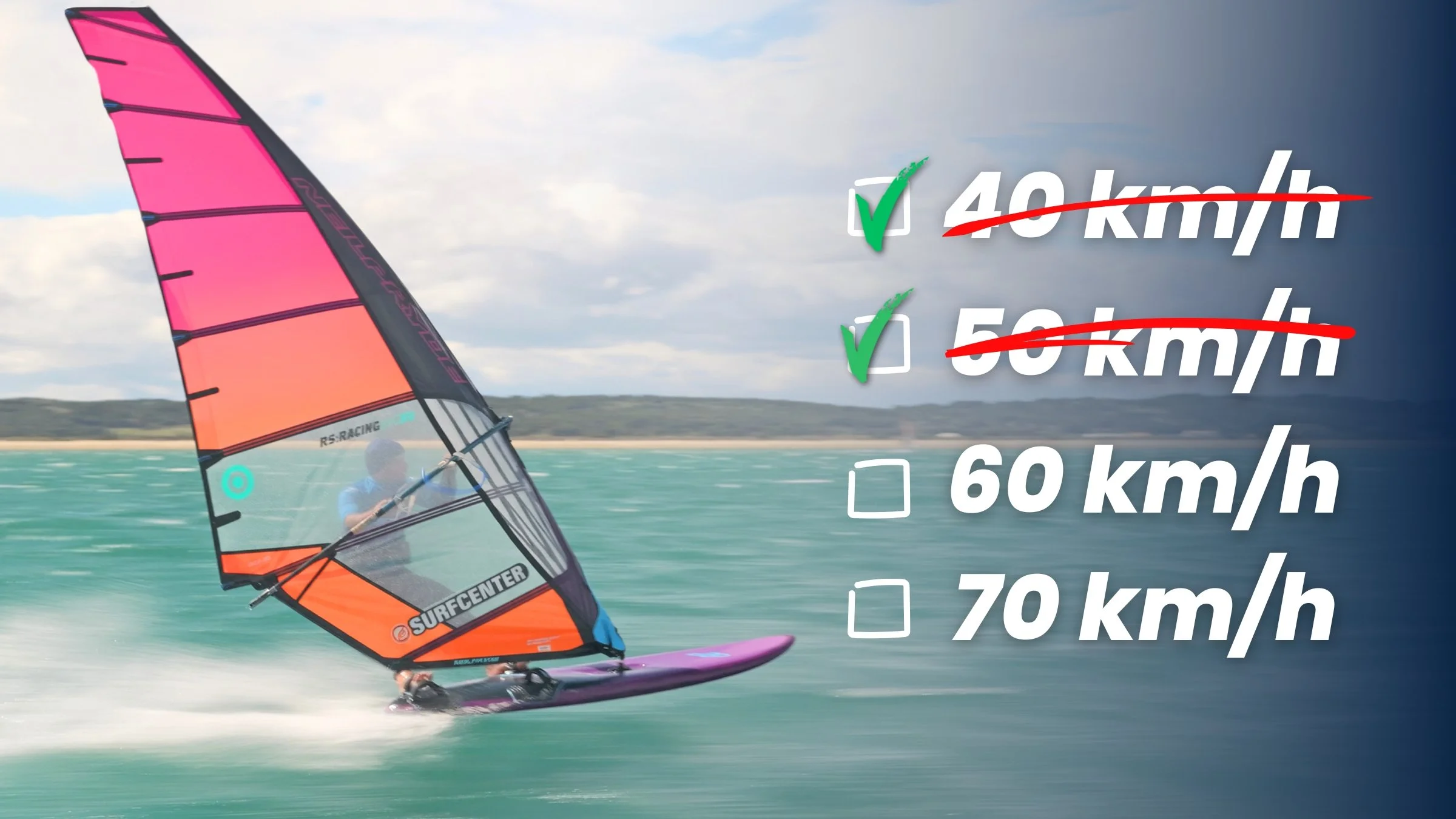
If you’ve ever stared at your GPS after a session thinking “Seriously? That’s it?” — you’re not alone.
40 km/h feels fast.
50 km/h feels wild.
60 km/h feels like the world is starting to blur.
70 km/h is where things get a bit… ridiculous.
In this article, I want to break down why so many windsurfers get stuck before their next speed milestone — whether that’s 40, 50, 60 or 70 km/h — and what you can realistically do about it.
This is not a “move your front hand two centimeters” technique tutorial (those will always have their place). This is a deeper look at the real reasons behind your plateau:
Your discipline and intention
Your time investment
Your personal fear barrier
Your equipment
Your physique
No sugar-coating. Just an honest look at what’s holding you back — and whether you’ll ever reach that number you’re dreaming of.
Why Speed Milestones Matter So Much
Whatever you’re doing in life, milestones keep you motivated.
If you only look at the “mountain peak” — like becoming a pro sailor or hitting 80 km/h — the distance from where you are now can feel demoralizing. You need smaller “checkpoints” along the way.
In windsurfing, speed is one of the cleanest, most satisfying goals you can have:
It’s measurable
It’s objective
Your GPS doesn’t lie
You either hit that new personal best… or you didn’t.
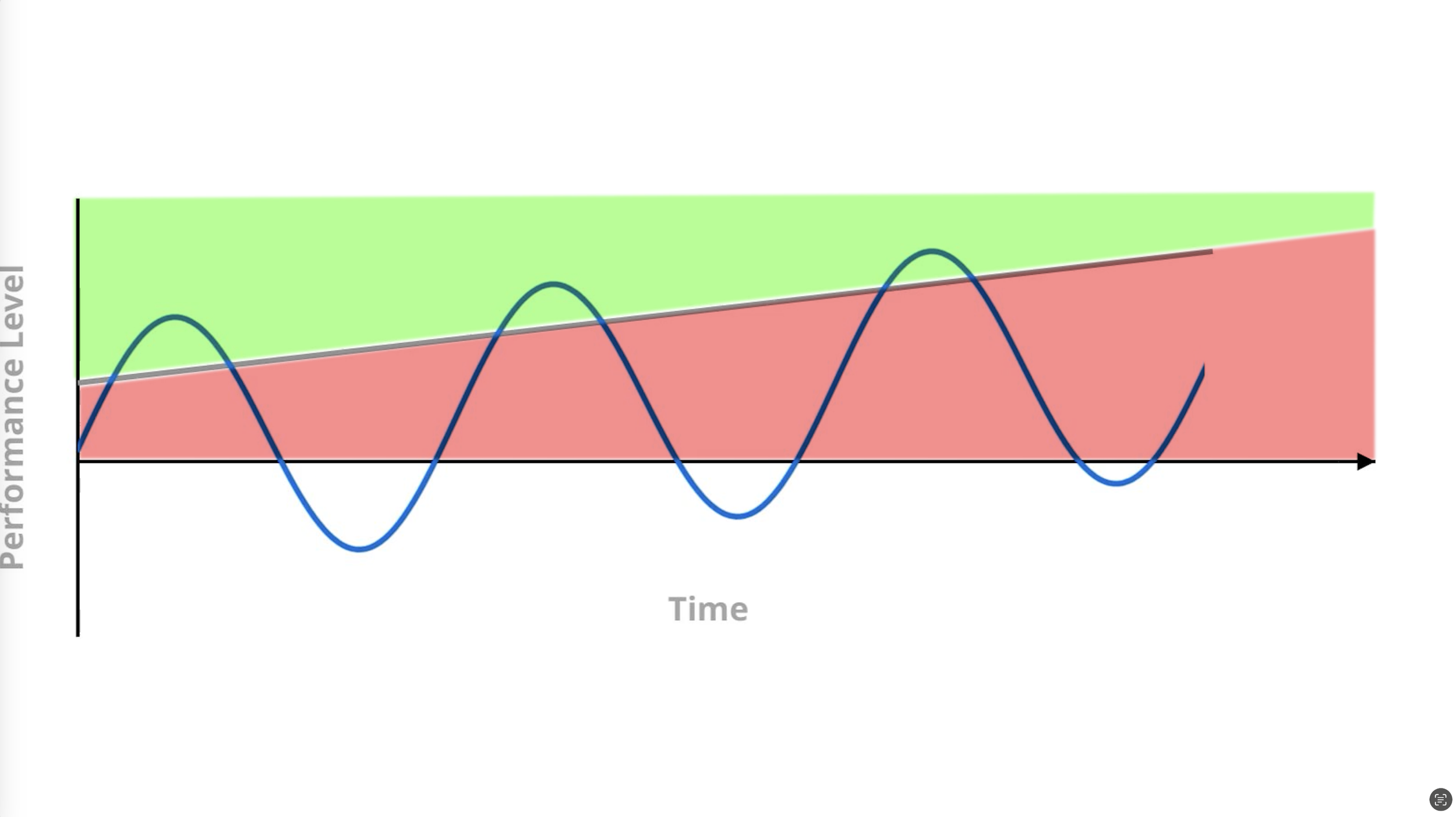
But at some point, almost everyone hits a wall. No matter what you do, your top speed just doesn’t move. It feels like you’re tied to an elastic band: you push harder, the tension increases, but you never quite break through.
That’s normal.
Progress in the beginning comes quickly. Plateaus are short and shallow. The more advanced you become, the longer and more annoying these plateaus get — and the smaller your improvements will be.
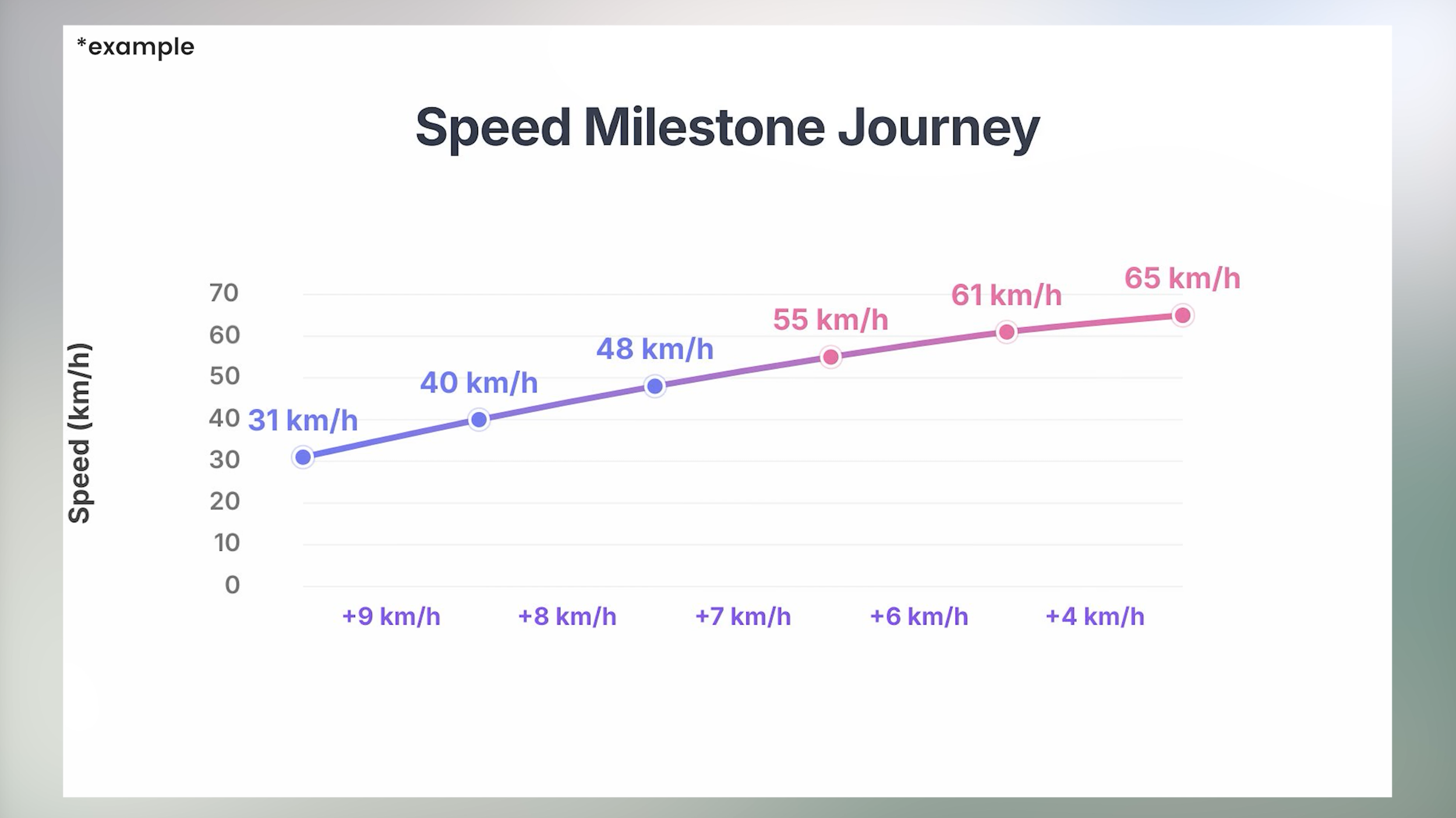
So it’s important to set your milestones realistically:
If you’ve just reached 30 km/h, aiming for 40 km/h next makes sense.
If you’re already at 50 km/h, your next milestone should maybe be 55 km/h, not straight to 70.
This is a mental game as much as it is a technical one.
What Other Windsurfers Are Struggling With
On my Instagram, I asked over 2,000 windsurfers about the next speed milestone they’re trying to hit. Here’s what came out of it:
17% are still working towards 40 km/h (or less)
30% have 50 km/h as their next big goal
32% are stuck around the 60 km/h mark
Only 21% are already chasing 70+ km/h
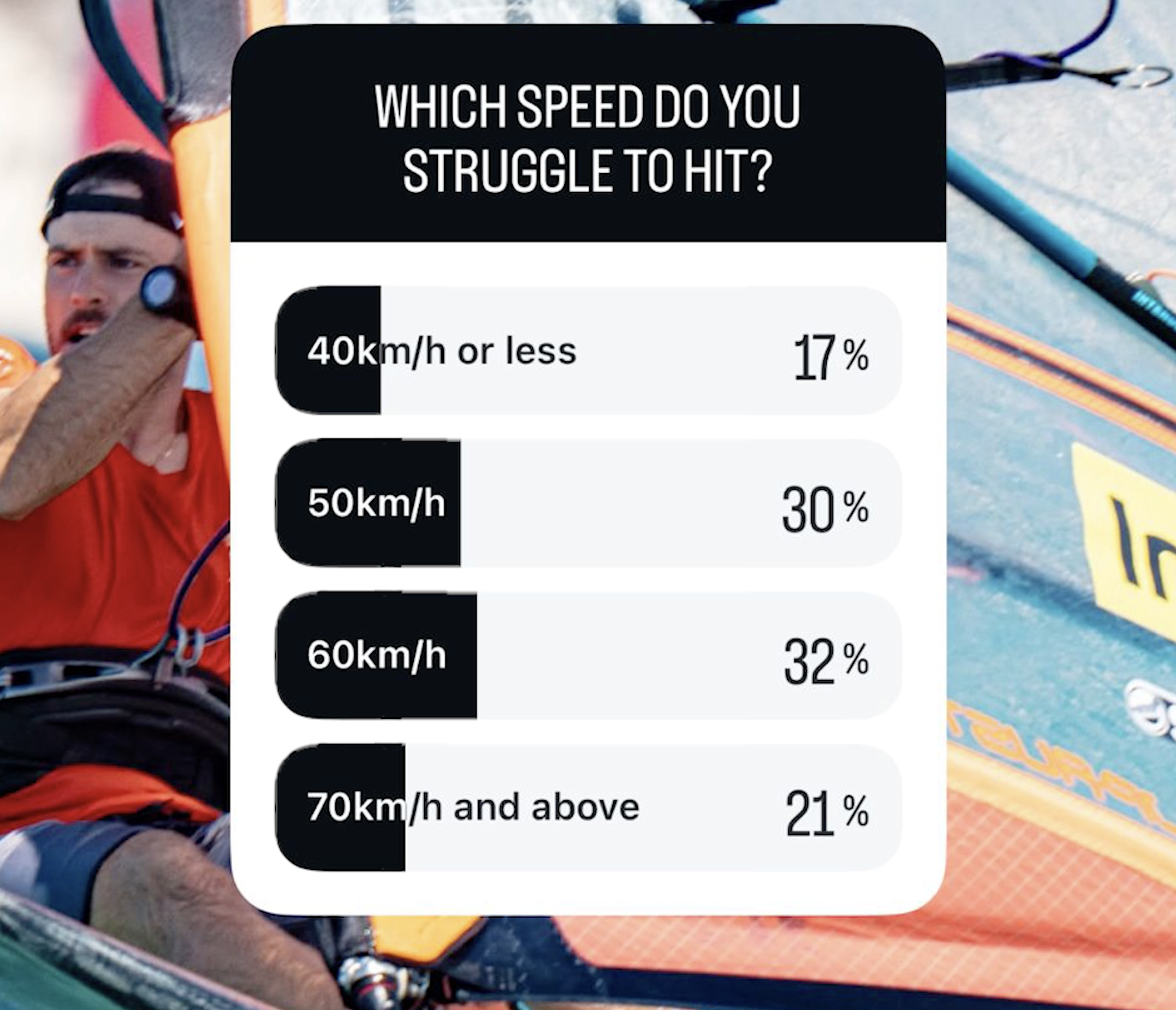
So if you feel “slow” compared to others — chances are, you’re not. You’re exactly where a lot of people are.
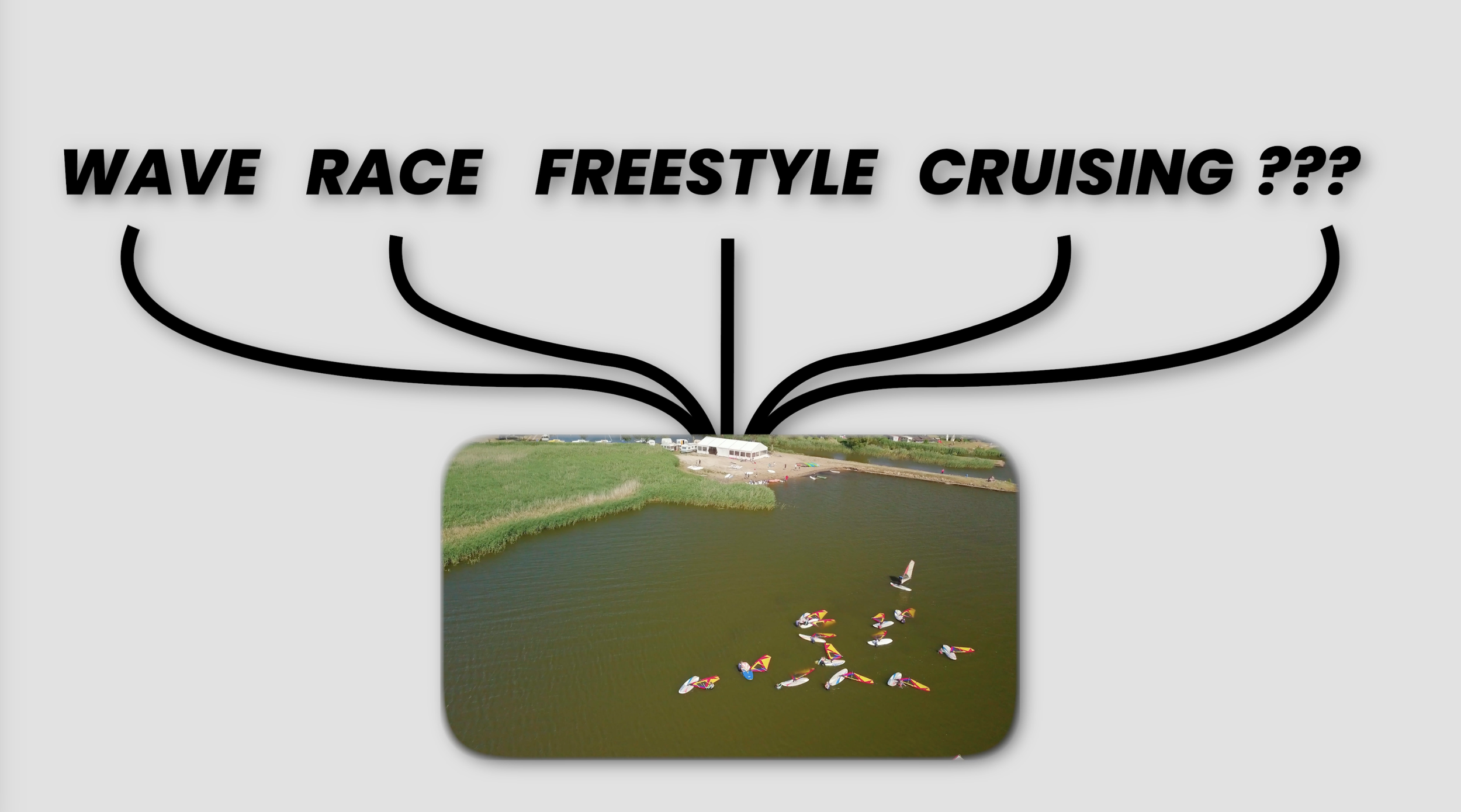
1. Discipline: What Kind of Windsurfer Are You Really?
The first hard question:
Where are you in your windsurfing journey – and where do you actually want to go?
When I started windsurfing, I only wanted to ride waves. Speed and slalom? I didn’t care at all.
The beach behind my home was my playground. I spent my first years just messing around in the waves. One day, with offshore wind, the surf center organized a little speed event. I grabbed some freeride gear from the center and managed about 33 km/h. That was the same year I started windsurfing — and I was incredibly proud.
But it still took me years before I really transitioned into racing and chasing speed. First on my dad’s freeride board, later on proper slalom gear.
Depending on your discipline, your whole approach to speed changes:
Wave / freewave: you care more about control and fun in rough conditions than max GPS numbers.
Freeride: you want comfort and fun, maybe some friendly speed battles with your friends.
Freerace / slalom / speed: now you’re intentionally hunting numbers.
If speed is just a side-quest for you, your determination will be lower. You might not be motivated to upgrade gear or tune every mm of your setup — and that’s perfectly fine.
But here’s the important part:
Whatever you’re doing right now should never hold you back from chasing your next personal milestone.
Even on a waveboard or a beginner board, you can already improve your speed technique. You might not hit 70 km/h, but you can absolutely push your own limits and grow.
At some point though, your discipline and equipment will cap how far you can go. And that brings us to the next point.
2. Time Investment: Are Your Expectations Even Realistic?
Let’s say you do want to get faster.
The next question is brutally simple:
How much time are you actually investing in this?
A few scenarios:
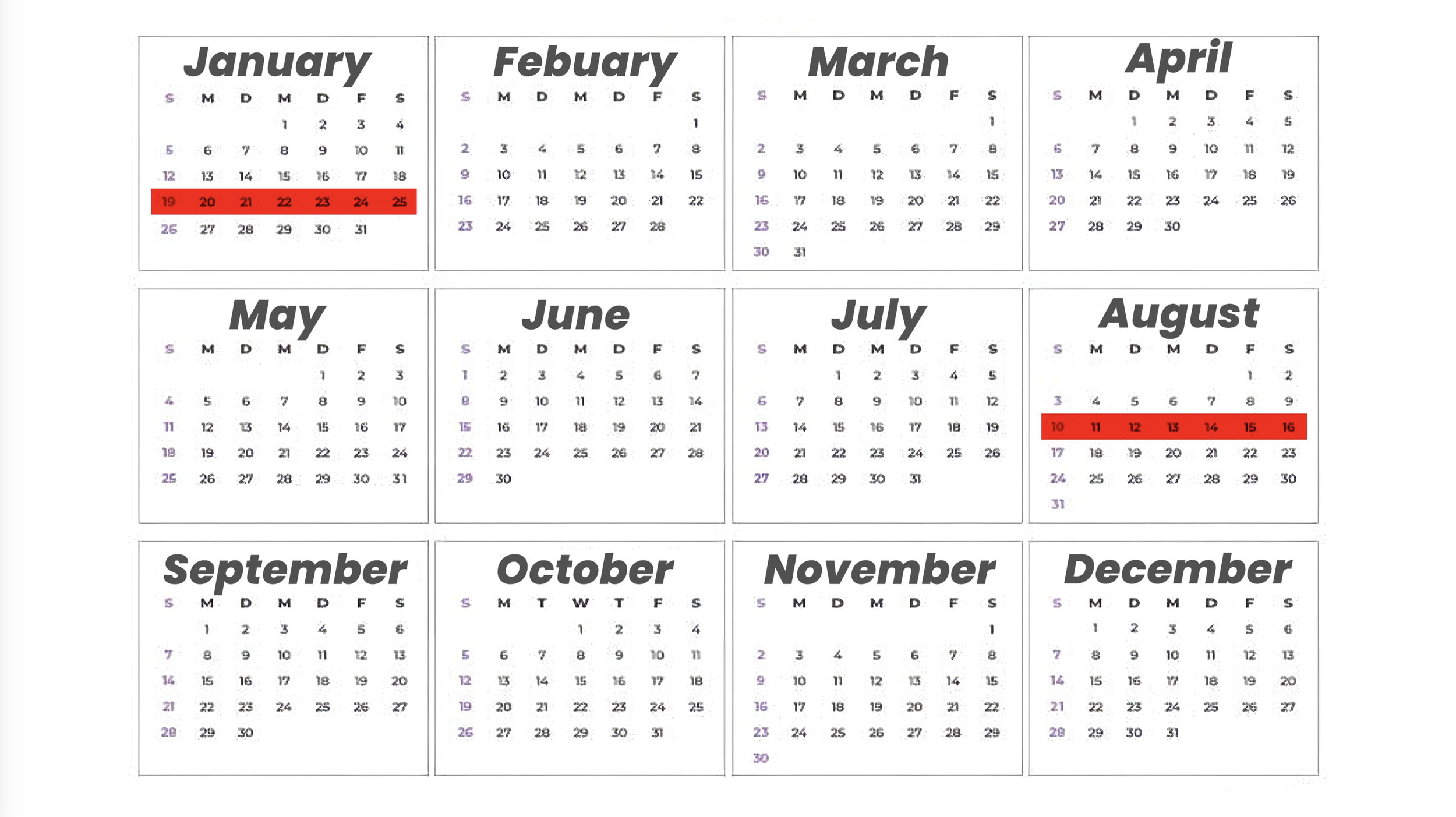
You sail twice a year on holiday:
Most of your sessions are just about getting back to the level you had last year. If you’re lucky with conditions, you might squeeze out a bit of progress — especially up to about 40 km/h. But expecting to suddenly break 60 km/hlike that? Unrealistic.
You sail a few times per month:
Now we’re talking. With focused sessions and decent conditions, you can absolutely move from 40 to 50, and start knocking on the door of 60 km/h.
You sail weekly or more, and stay connected to your gear:
That’s the level of dedication usually needed if you want to hit 70 km/h and beyond.
I personally hate being behind my own expectations. So I try to keep my expectations realistic. That way, I can’t “disappoint” myself — I either hit my goal or I understand why I didn’t.
How to Use Your Time Smartly
You don’t need to live at a super windy spot to improve, but you do need to stay connected to your windsurfing.
Two big time investments pay off massively:
a) Time on the Water
Repetition is king. The more often you sail, the more natural your stance, sheeting, and control become. That’s obvious.
b) Time Analyzing and Tuning
This is where most people lose free speed.
Video analysis is, in my experience, the number one accelerator of progress.
Seeing your stance, your sail trim, your body position — and having someone who knows what they’re looking at give you feedback — is priceless.
That’s exactly why, in my windsurfing experiences and clinics, we use video so heavily. We’ve already helped a lot of people hit their next milestone while also having an unforgettable trip on the water.
Tuning your equipment is the other huge factor.
Between “random trim” and “proper trim”, you can easily gain up to 10 km/h of top speed. Downhaul, outhaul, mast foot, boom height, fin choice — it all matters.
Spending an extra 30 minutes per session on tuning and checking your setup is time very well spent if you’re serious about speed.
So before blaming anything else, ask yourself:
Am I really sailing often enough for the milestone I want?
Am I using my off-water time smartly (learning, analyzing, tuning)?
If the answer is “yes”… and you’re still stuck…
then it might be your mind holding you back.
3. Your Personal Fear Barrier
Let’s be honest:
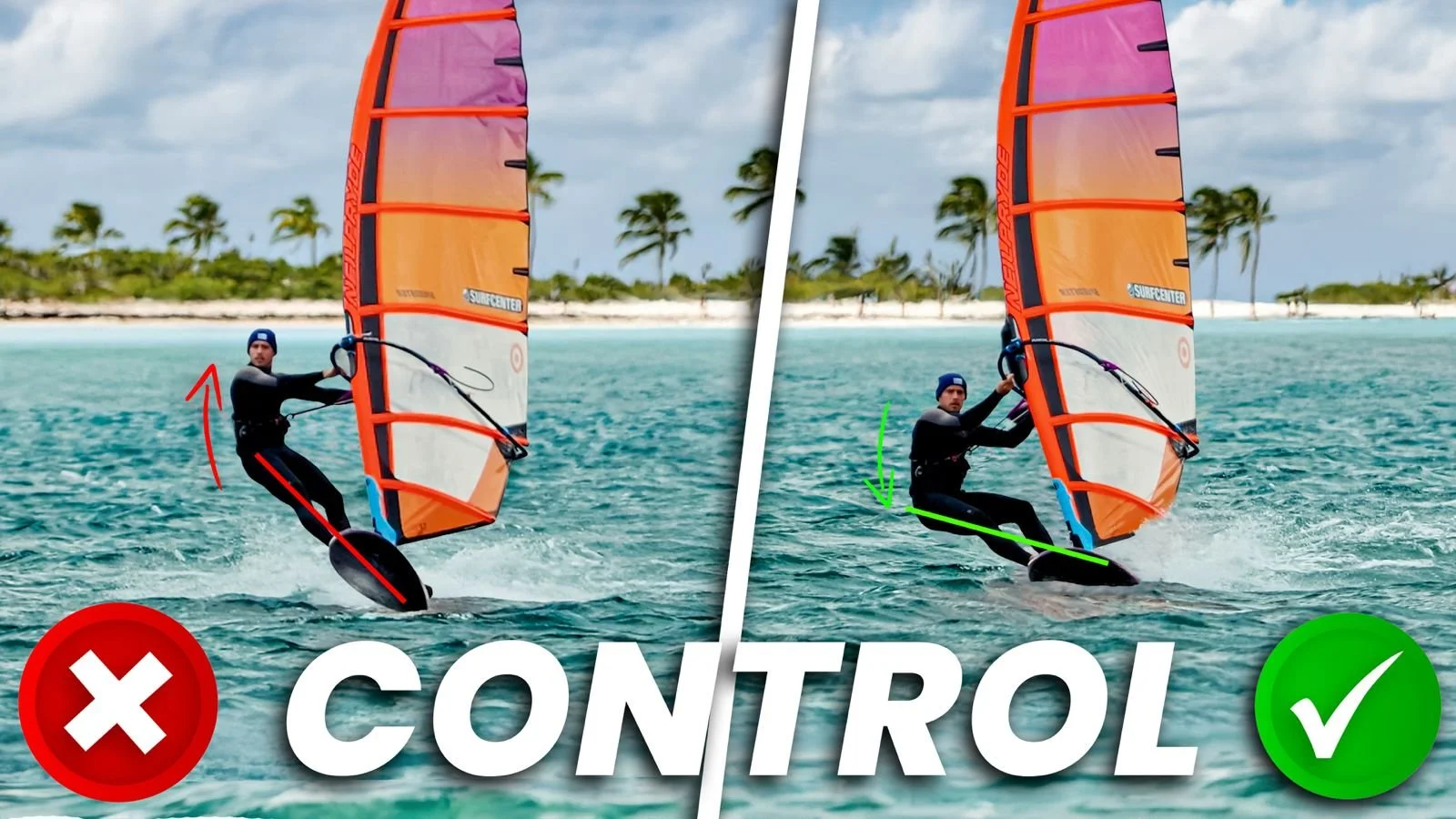
Sometimes you just don’t sheet in when the big gust hits.
You know what to do. You’ve watched the technique videos, you’ve practiced your stance… But when the board starts to lift, the wind noise gets louder, the chop starts hitting harder — your body hits the panic button.
Your instinct says: “Abort mission.”
Your hands open a little. You dump power from the sail. You ease off the fin.
That tiny micro-hesitation is your speed barrier.
Everyone has that barrier.
Some feel it at 30 km/h, some at 50, some at 70. But it’s there — and it exists to keep you safe. It’s not a flaw. It’s literally your survival instinct.
The trick is not to “get rid” of fear. The trick is to retrain it.
You teach your brain:
“This speed is okay. I’m still in control.”
You do that by stretching your comfort zone gradually:
Push 1–2 km/h beyond what feels “normal”
Get used to that level
Let your brain accept it as “safe”
Then push a bit further next time
It’s the same process as learning to jump higher, sail in more wind, or attempt your first planing jibe. You don’t go from “terrified” to “fearless” in one session. You go from terrified to slightly less terrified — and repeat.
The important thing to remember:
Progress only happens at the edge of your comfort zone — never inside it.
If you’re doing everything else right but never quite commit when the big gust arrives… your barrier, not your technique, might be holding you back.
4. Equipment: Is Your Gear the Limiting Factor?
Now we get to the thing that’s easiest to blame:
“My gear is too slow.”
Sometimes that’s just an excuse. But sometimes… it’s actually true.
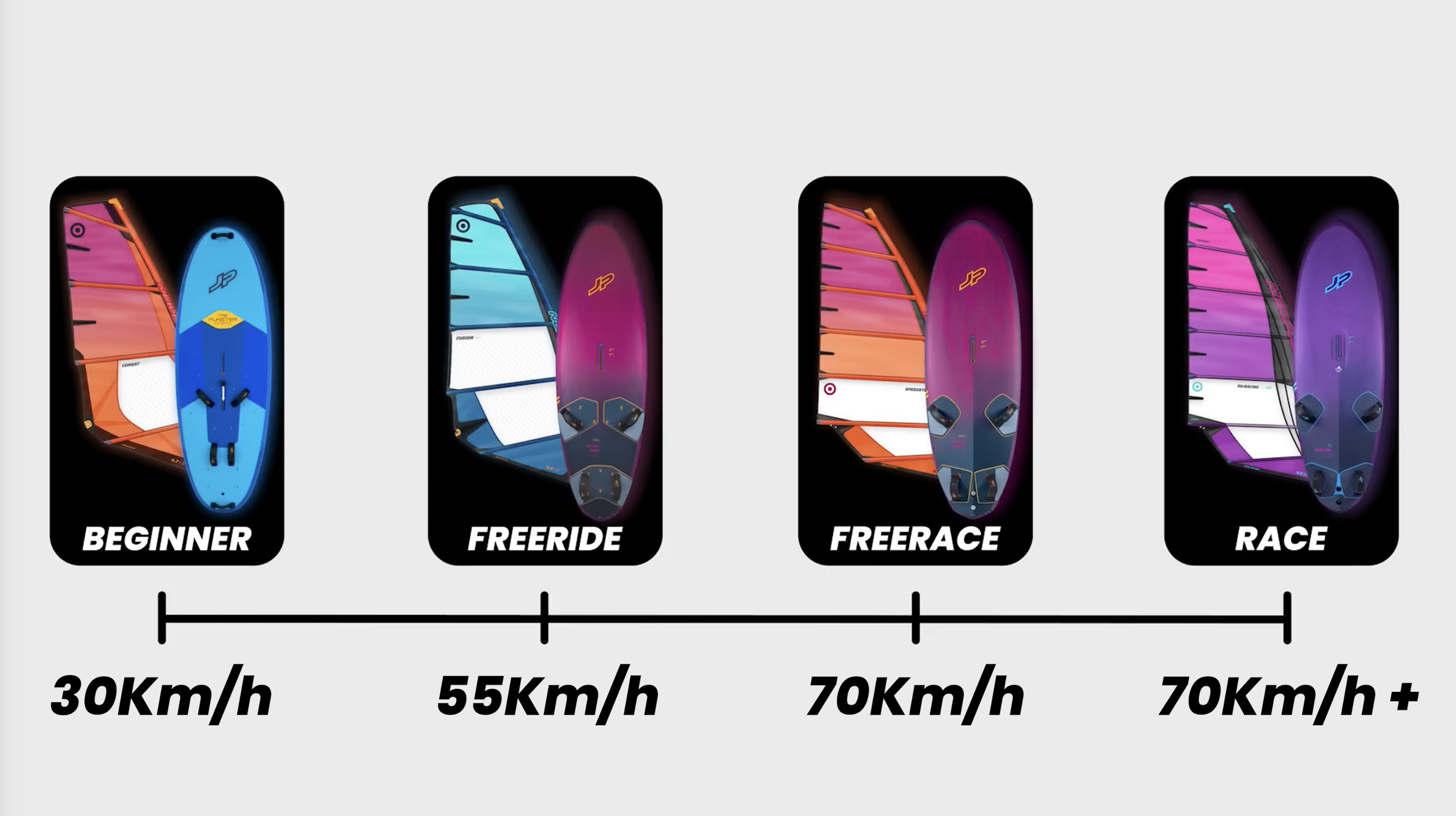
Different disciplines and setups come with different ceilings. Obviously, this varies with rider skill, weight, spot conditions and trim — but to give you a rough idea (assuming flat water and decent power):
On pure wave gear (thruster or quad):
Hitting around 55 km/h is already very good.
On a wave/freewave board with a longer single fin:
You can get closer to 60 km/h.
On a freeride setup (~120 liters, 7.0 m² sail):
65 km/h is very fast.
On a freerace board with freerace or race sail:
70 km/h+ becomes realistic.
As soon as chop comes into play, those numbers drop quickly — easily 5 km/h or more in heavy chop.
So, first step: be realistic about what your current setup can do.
Fine-Tuning vs. Upgrading
There are two ways to unlock more speed:
Optimize what you already have
Proper trim
Matching fin size to board & sail
Adjusting mast foot, harness lines, boom height
Learning to sail the board “free” without losing control
A well-trimmed freeride set can outrun a badly tuned slalom setup. Don’t underestimate this.
Upgrade smartly when the time is right
Moving from wave/freewave to freerace gear
Upgrading from stock fin to a performance fin
Going from freeride sail to freerace/race sail
A good performance fin in a freeride or freerace board can be one of the best “speed upgrades” for your money — often cheaper than a new sail or board, but with a very noticeable effect.
With Surfcenter, we help riders exactly with that:
finding the right step in their gear journey — from used gear to the latest high-end setups. If you’re unsure what you need next, you can always reach out via WhatsApp, email, phone or in person, and we’ll help you find a setup that matches your spots, your level and your budget.
And yes, I also developed my own range of fins — NP7 Fins. Producing high-end fins takes more time than expected, so we delivered the first orders and have some very happy customers, but stock is still limited. We’re also working on a more affordable performance fin line.
If you don’t want to miss that, I have a WhatsApp group where we share updates and chat about fins and speed (please don’t abuse my number though — I already struggle to keep up with messages 😄).
But okay — enough advertising. Back to performance.
The Technical Bit: Board Rail and Fin Pressure
To go fast, you want:
As little resistance in the water as possible
Steady, strong pressure on the fin
That means:
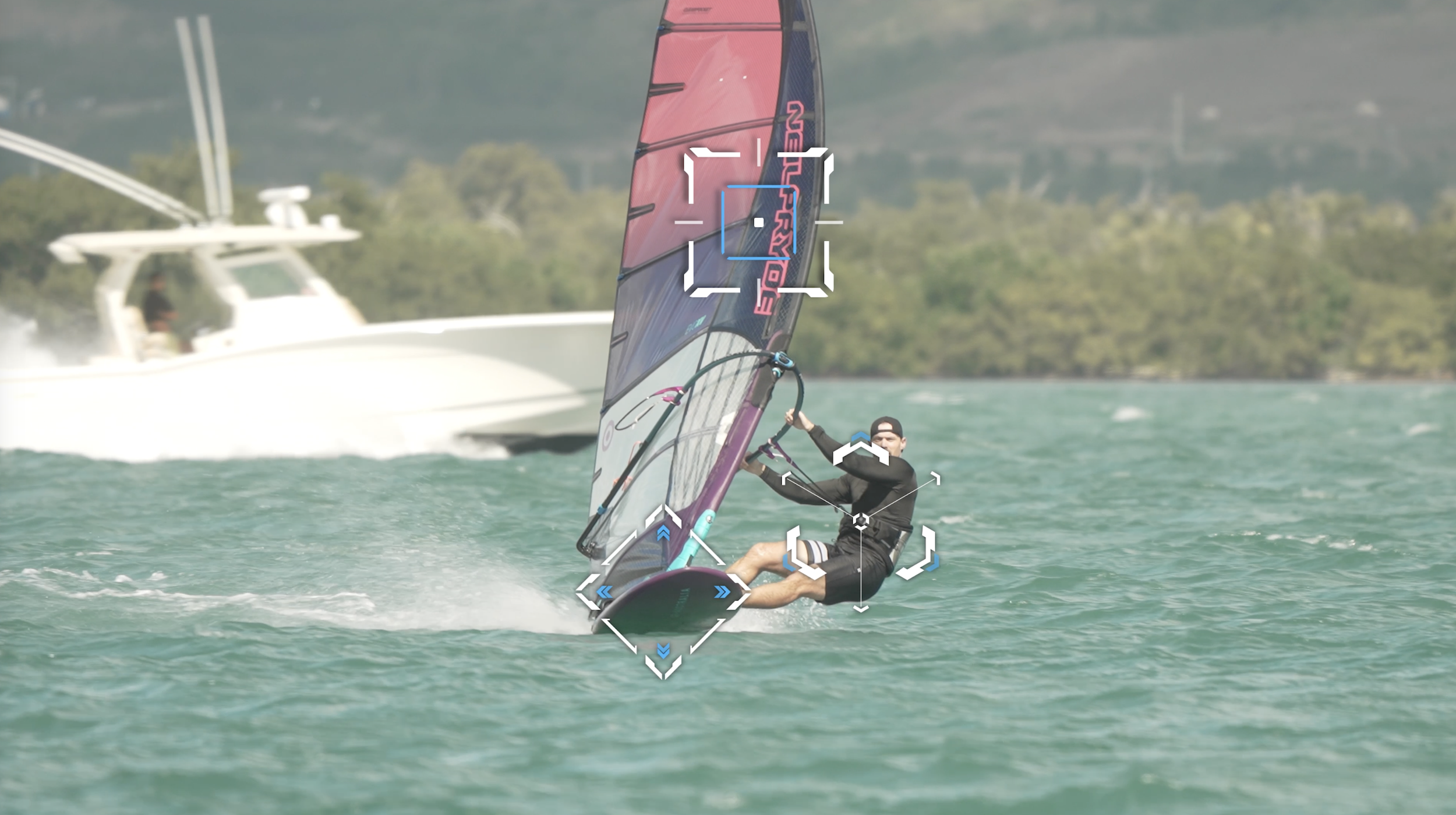
You rail the board up, reducing the wetted surface area.
You keep the sail powered and drive the board forward on the fin.
A common mistake:
Some riders focus so much on railing the board that, visually, it looks insanely fast — but their GPS only shows 60–70 km/h even in perfect conditions.
Usually, that’s because they’re not keeping enough pressure on the fin. They rail the board but “baby” the power.
If you have to release fin pressure every time a gust hits just to keep the board under control, your setup has too much power for your current skill and weight — or your trim is off.
You need a combination of:
Enough power to rail the board
But not so much that you’re forced to let go when it matters most
Board size, sail size and fin size are connected. Get that equation wrong, and your speed will always be capped.
Join one of my windsurfing experiences
We combine coaching, video analysis and epic trips — and yes, many riders hit new personal bests during these weeks.
Checklist
1. Discipline (Windsurfing Type & Intention)
Ask yourself:
☐ What discipline am I currently sailing?
Wave / Freewave
Freeride
Freerace
Race / Slalom
☐ Is speed actually a priority for me?
☐ Am I using equipment that matches my speed goals?
☐ Am I mentally ready to progress into faster disciplines (freerace / race)?
☐ Do I understand that wave & beginner gear naturally limit my top speed?
If speed is your ambition:
☐ Am I willing to upgrade step-by-step (beginner → freeride → freerace → race)?
☐ Am I okay with slower progress if speed is only a side-goal?
2. Time Investment
Water time:
☐ I windsurf at least a few times per month (40–50 km/h goals)
☐ I windsurf weekly or more (60–70 km/h goals)
☐ My expectations match how often I actually sail
Off-water preparation:
☐ I regularly watch tutorials and study technique
☐ I compare my stance to faster riders
☐ I use video analysis to identify mistakes
☐ I invest at least 20–30 minutes per session in tuning my gear
☐ I stay connected to my equipment even when it’s not windy
Realism check:
☐ My next milestone is realistic (30→40, 50→55, etc.)
☐ I accept that conditions must align to break PBs
3. Personal Barrier (Fear & Commitment)
☐ I recognize when fear makes me open the sail
☐ I understand that micro-hesitations cap my speed
☐ I practice pushing 1–2 km/h beyond my comfort zone
☐ I expose myself gradually to higher speeds
☐ I understand it’s normal to be scared at every level
☐ I consciously retrain my brain that new speeds are “safe”
☐ I know progress happens only at the edge of my comfort zone
4. Equipment Check
General equipment suitability:
☐ My gear is realistic for my speed goals
☐ I understand typical limits:
Wave gear: ~55 km/h
Freeride gear: ~65 km/h
Freerace/Race: 70+ km/h
Trim & tuning:
☐ My downhaul is correct
☐ My outhaul is correct
☐ My mast track position is tested & tuned
☐ My fin size matches my sail & board
☐ I check trim every session (not once per season!)
Fin & board dynamics:
☐ My board is riding free with reduced wetted surface
☐ I apply consistent, strong pressure to the fin
☐ I’m not overpowering myself to the point of losing control
☐ I know how sail size, board size & fin size relate
Upgrade considerations:
☐ I know whether my equipment has reached its limit
☐ I consider a performance fin as a cost-effective upgrade
☐ I’m willing to adjust to new gear before expecting higher speeds
5. Physique / Fitness
Weight & performance:
☐ I understand how weight affects speed (fat ≠ ideal; muscle = better)
☐ I’m not expecting 70 km/h at 55 kg with freeride gear
☐ I stay reasonably fit and mobile
Strength training:
☐ I work on hypertrophy (muscle building)
☐ I train core strength to improve control & stability
☐ I maintain good mobility for early planing & jibes
Honesty check
☐ My body weight is not limiting my fin pressure
☐ I’m not relying on “beer belly speed”
☐ My fitness supports speed progression, not limits it
Final Self-Evaluation
If you’re stuck below your next milestone, ask:
☐ Did I choose the right discipline?
☐ Am I investing enough time?
☐ Is fear stopping me?
☐ Is my equipment realistically capable?
☐ Is my physique supporting my goals?