Tenerife Spot Guide for Watersport
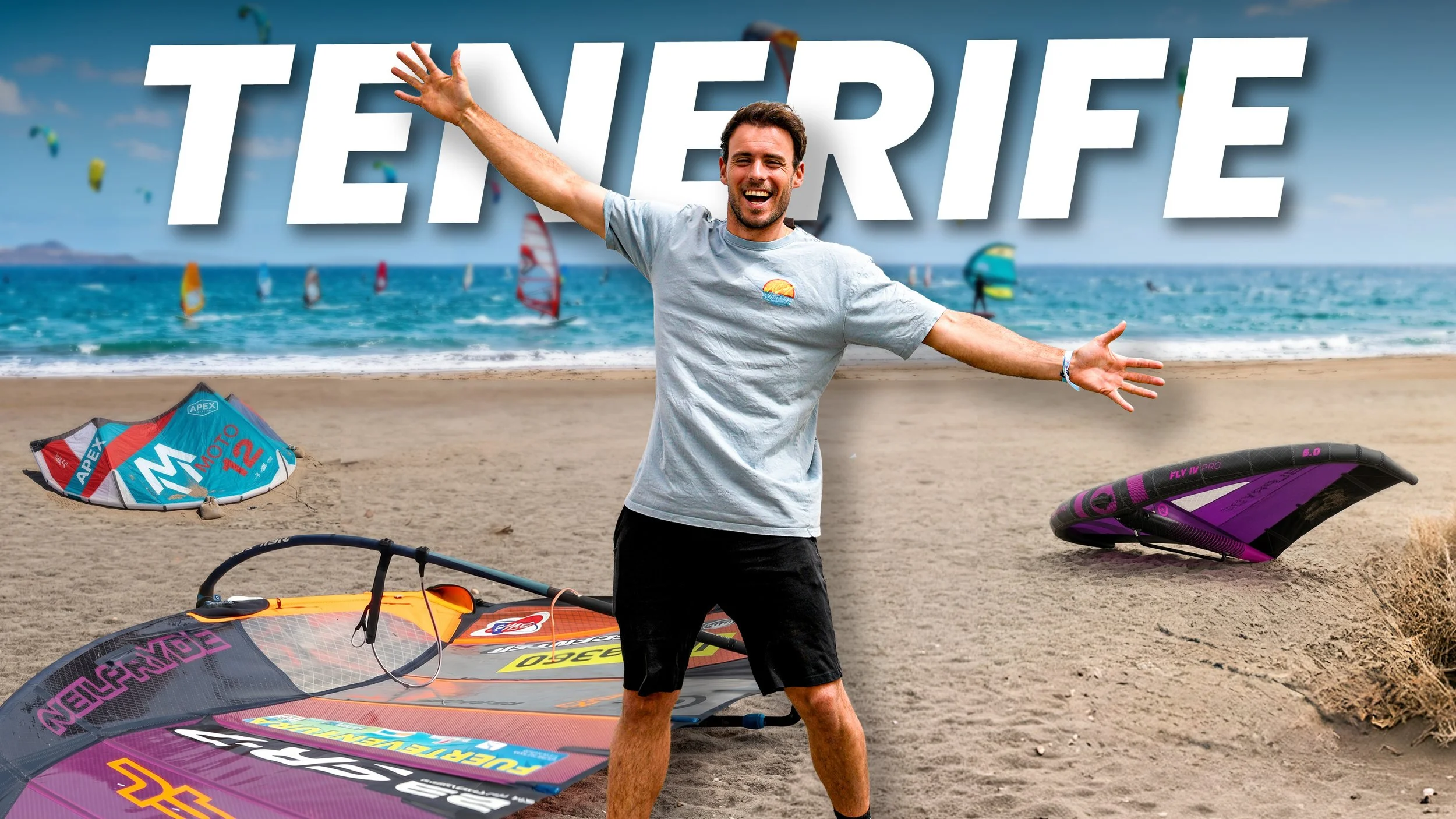
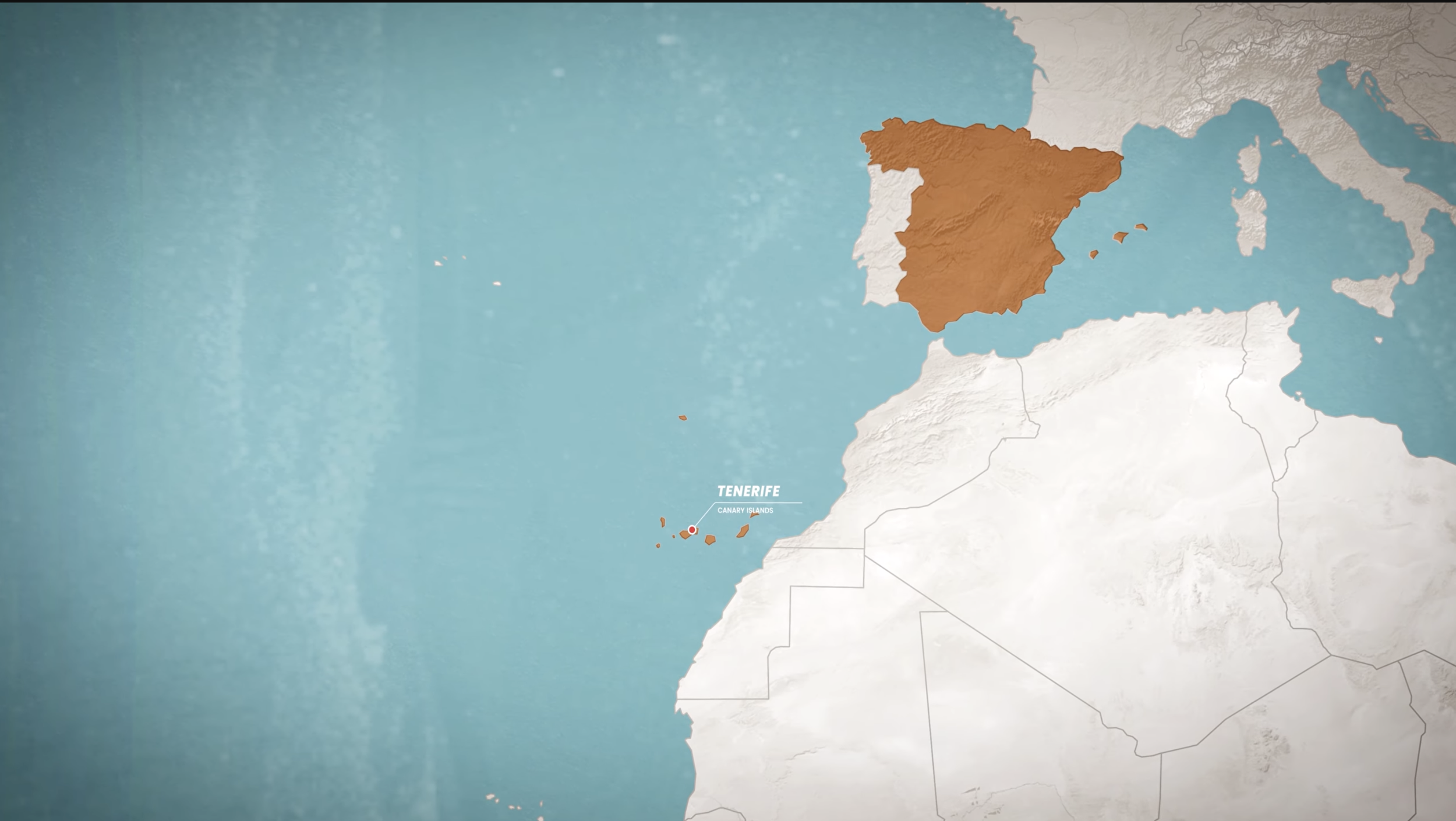
Tenerife has become one of Europe's most important water sports hubs. But it's not perfect, and that's important to understand before you book your tickets. This guide covers everything: the spots, the gear, the logistics, the culture, and the honest reality of what it's like to sail here.
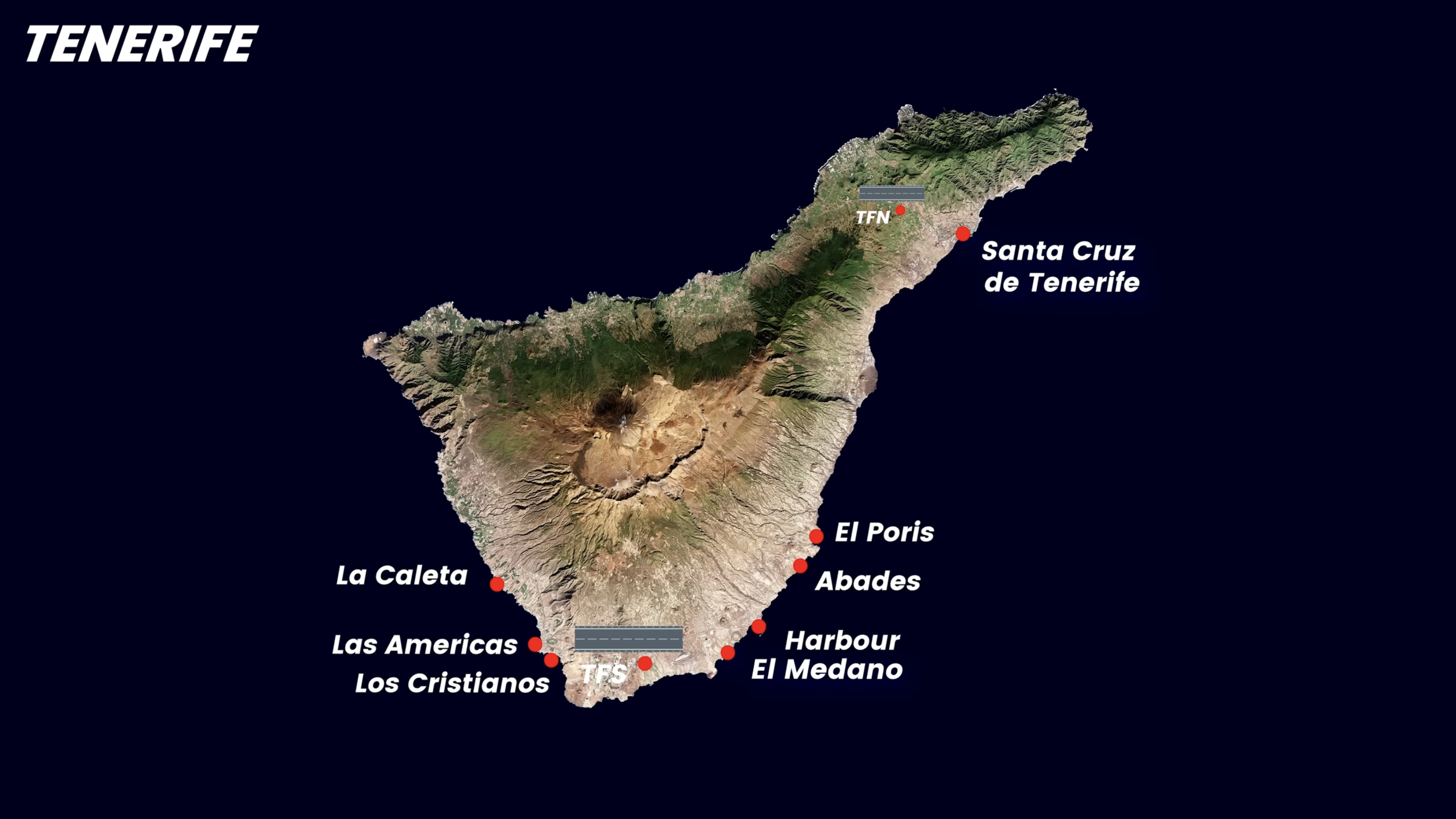
There are two airports on the island. Tenerife South (TFS) is your main access point for water sports. Tenerife North (TFN) is mostly used for inter-island or national flights. You want to fly into the south. From there, El Medano is just 10 minutes away, which makes the transfer about as painless as it gets in the world of windsurf travel. From central Europe you're looking at about four to five hours of flight time, and there are frequent connections year round with both budget airlines and regular carriers.
You don't need a rental car, and honestly, I wouldn't recommend one. Parking across El Medano and most of the spots on the island is an absolute nightmare. If you're staying in El Medano and plan to sail the main bay, you can walk to everything. A car only becomes useful if you want to explore the outlier spots on no-wind days or chase westerly conditions at La Caleta or Las Americas. If you do rent, expect to pay between €25 and €50 per day.
When to Go
The main wind system here is the northeasterly trade winds. They're most consistent from May to September, but they often blow year round. During summer, which is peak season, you'll regularly get 20 to 35 knots in a pretty stable pattern. This is when El Medano really comes alive, and when you'll find the biggest community on the beach.
In winter, the northeast trades get more inconsistent, and west or southwest winds become quite possible. In El Medano, those are offshore, which makes for very different but still decent conditions. The westerly winds fire up spots like La Caleta and Las Americas, so winter isn't a write-off by any means. It's just a different game. You need to be more flexible, check forecasts more often, and be willing to drive to wherever the wind is working that day.
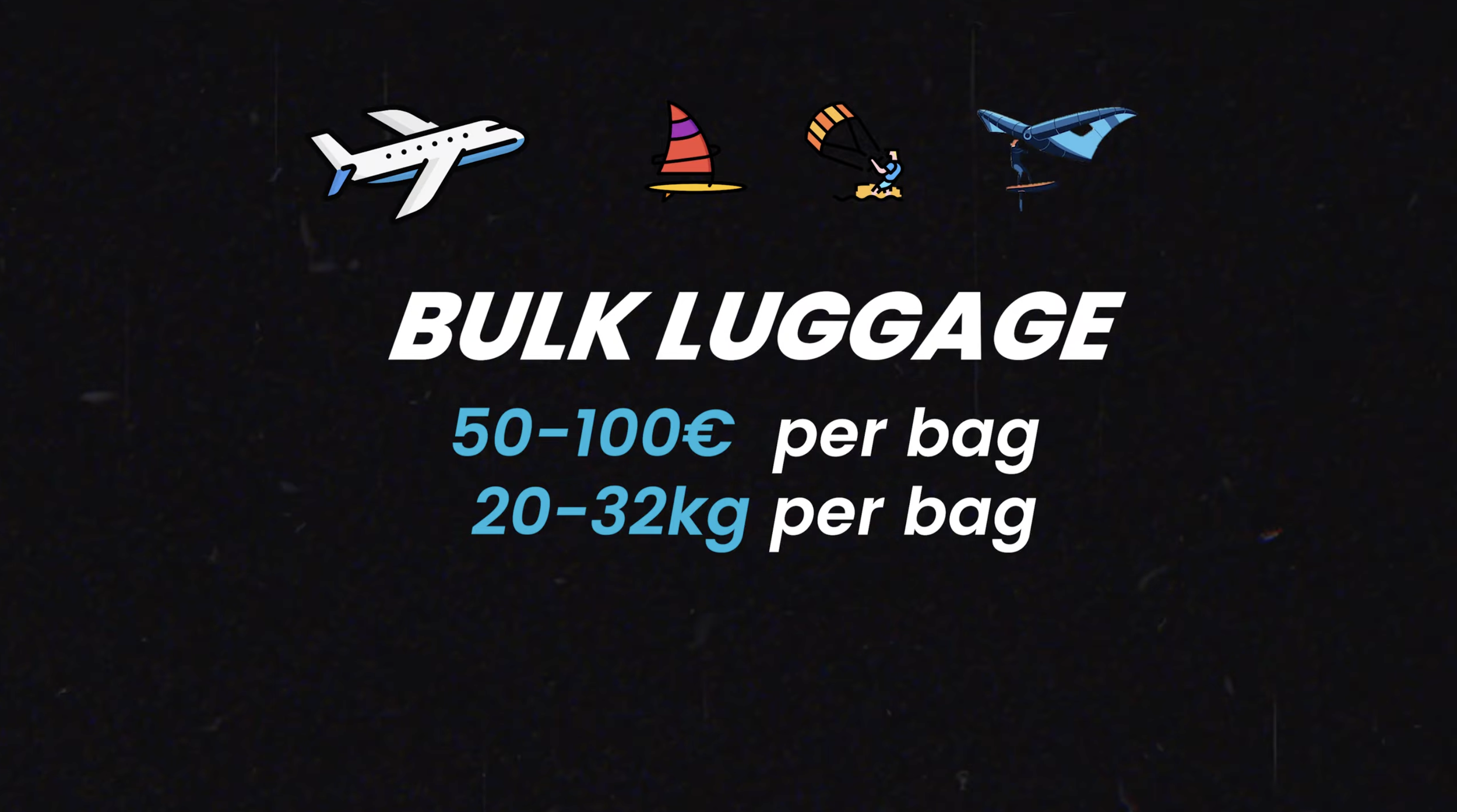
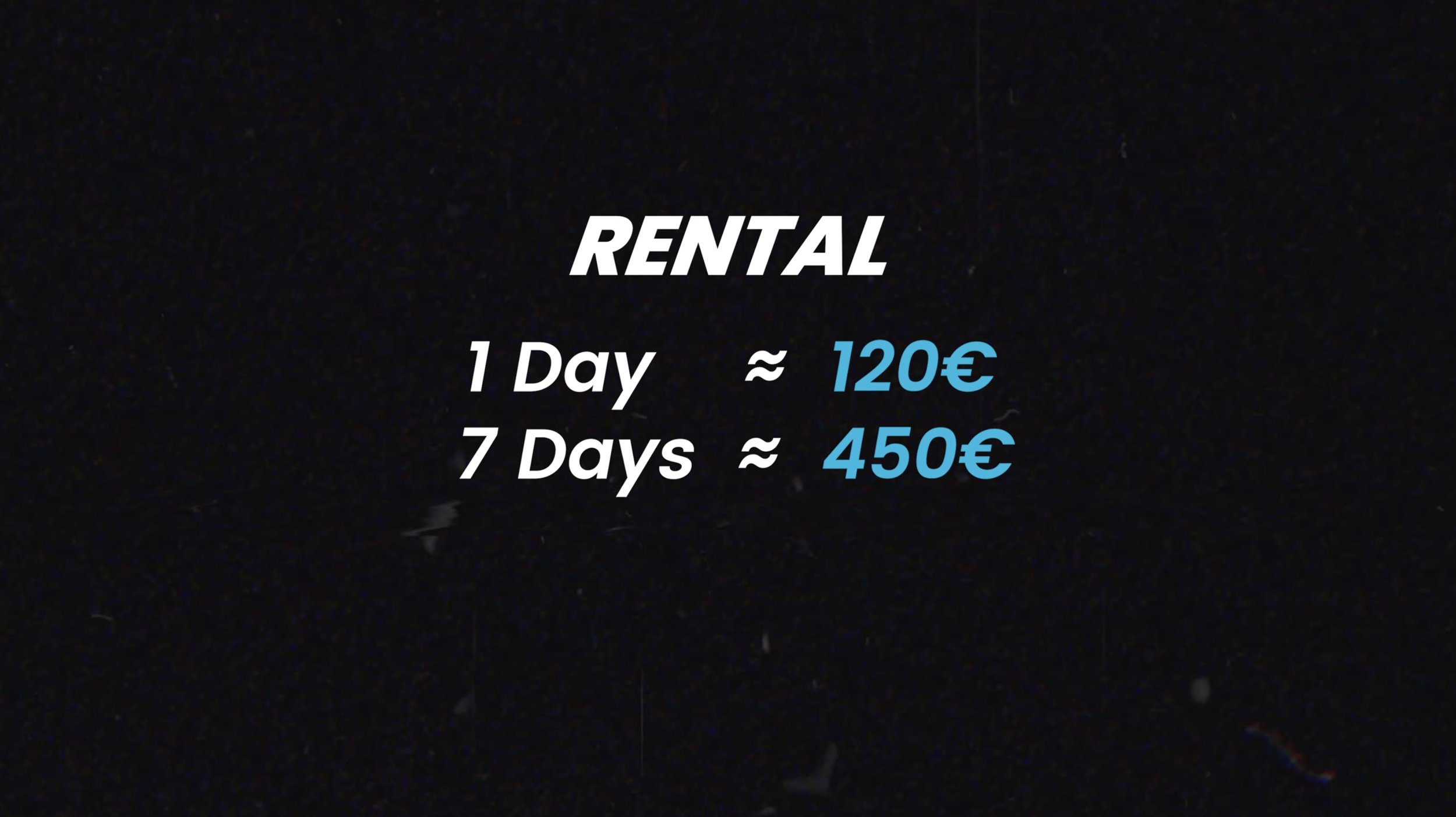
Whether you bring your own equipment is a personal decision depending on how long you stay and how much hassle you want. Most airlines accept windsurf, kite, and wing bags, but they charge extra. Rental in El Medano is a real option though: there are several well-equipped centers right at the beach with a solid range of current equipment.
Rule of thumb: If you're coming for serious performance training, bring your own gear. If you're coming for the experience, rental works super well. Rental rates run about €75/day for windsurf or wing gear, with weekly deals available.
Expect strong wind. On a typical summer day you'll be on anything from a 3.7 to a 5.0. In winter, you might need a 5.5 to 6.5 for the lighter days. The conditions here are rough: near shore the wind can be patchy, so getting out against the shorebreak can be super tricky. Once you go further outside, you have big rolling swell and strong winds. This is not a flat water spot.
El Medano: The Beating Heart
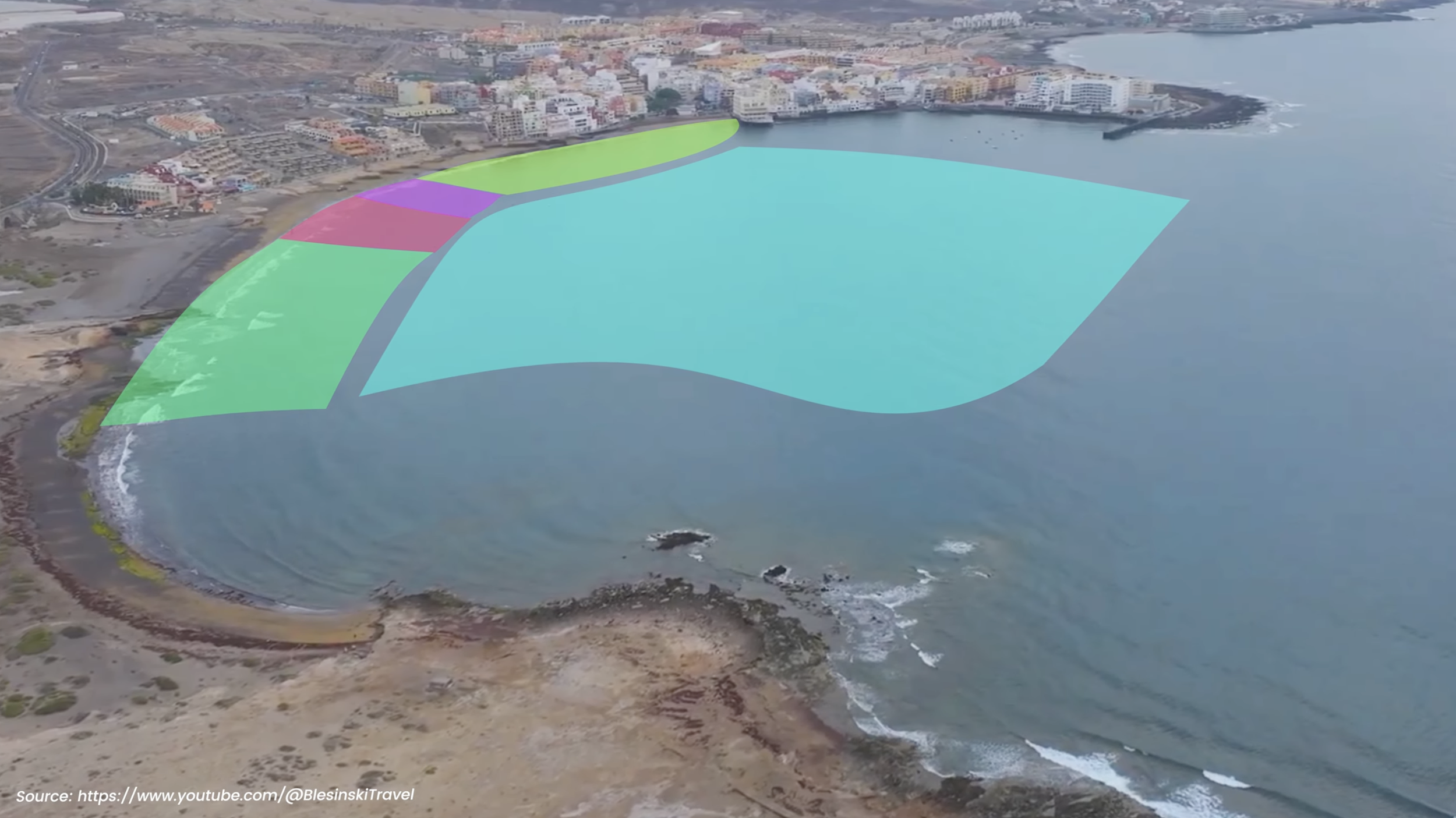
El Medano is the beating heart of water sports in Tenerife. It offers windsurfing, kitesurfing, wing foiling, pretty much any kind of foiling, and beginner surfing conditions. It consists of four zones: the South Bay, the Harbor Wall, El Cabazo, and La Aquita. Everything sits within walking distance, and the infrastructure is built around the sport. This is a place where water sports aren't a novelty: they're the entire reason the town exists.
South Bay
The South Bay is the main bay, the first thing you see when you arrive, and where most people spend the majority of their time. The zones are clearly marked by buoys. Upwind you have the swimming zone, then comes the surf zone, followed by the windsurf and wing zone, and furthest downwind is the kitesurf zone. Once you're outside the buoy lines the sports start to mix, but inside the bay this zoning system is critical to respect.
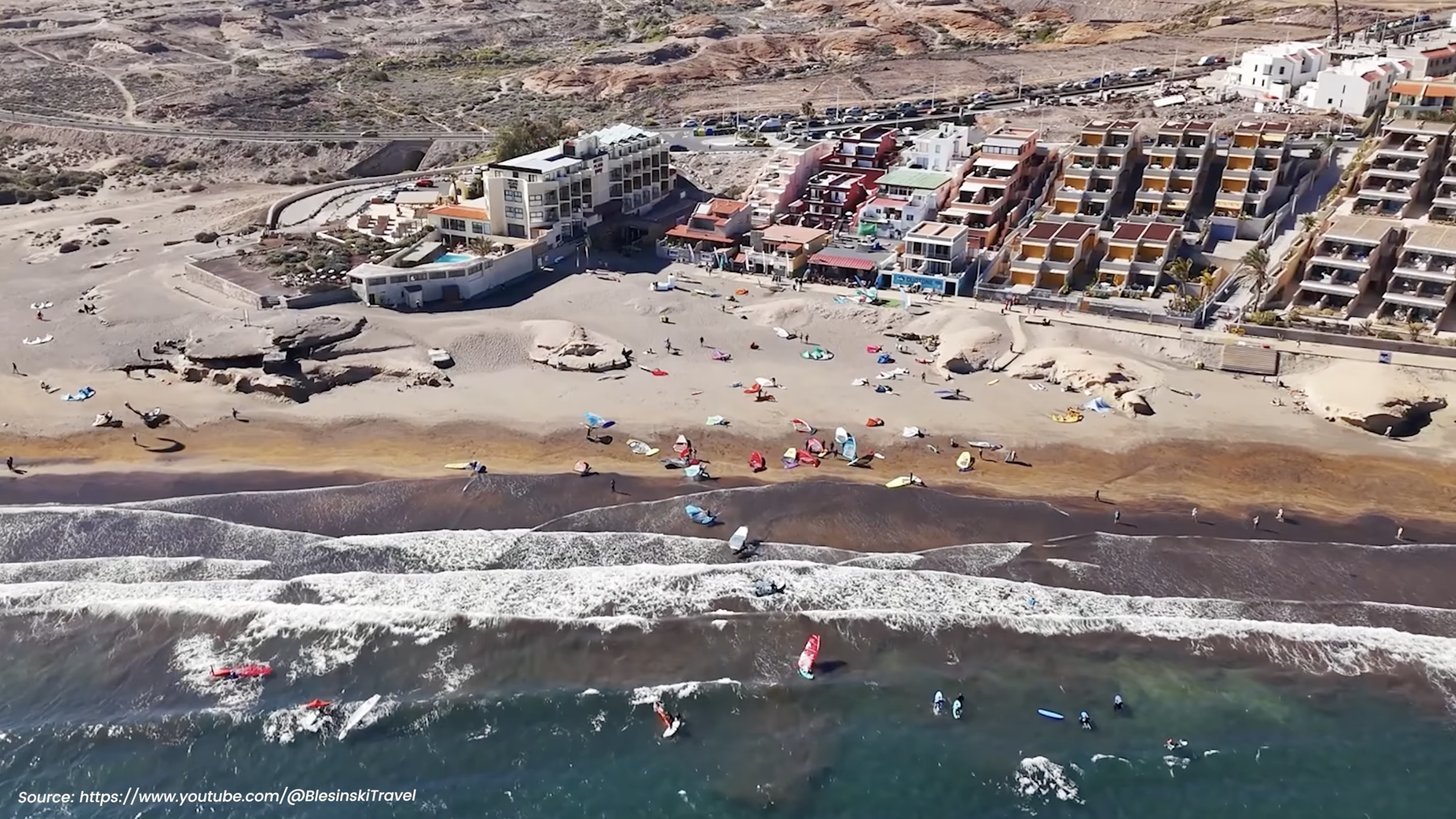
The bay itself is a bit less windy than what you'll find further along the coast. The town provides some wind protection, which makes the spot more gusty but also easier in terms of waves. The city doesn't only block some wind, it also blocks the bigger waves. So here you have people of all levels: amateurs, rental center clients, people just getting into the sport. On any given day you'll see someone out on a 3.7 ripping alongside someone on their first rental session with a 5.0.
HarboUr Wall
Walk straight from inside the South Bay through the town and you reach the harbor wall. You can't really launch from here, not unless you fancy jumping off the wall itself. But once you're on the water, sailing past the harbor wall is absolutely incredible. There's a nice wave running down the line that works best at low tide. You can really take your wave sailing to the next level here.
The beauty of this spot is the safety margin: if a wave catches you, you just get drifted down into the bay. You don't have to worry about landing on a reef. If you want more punch, move further upwind where there's a shallow reef that produces a more powerful break.
El CabEzo
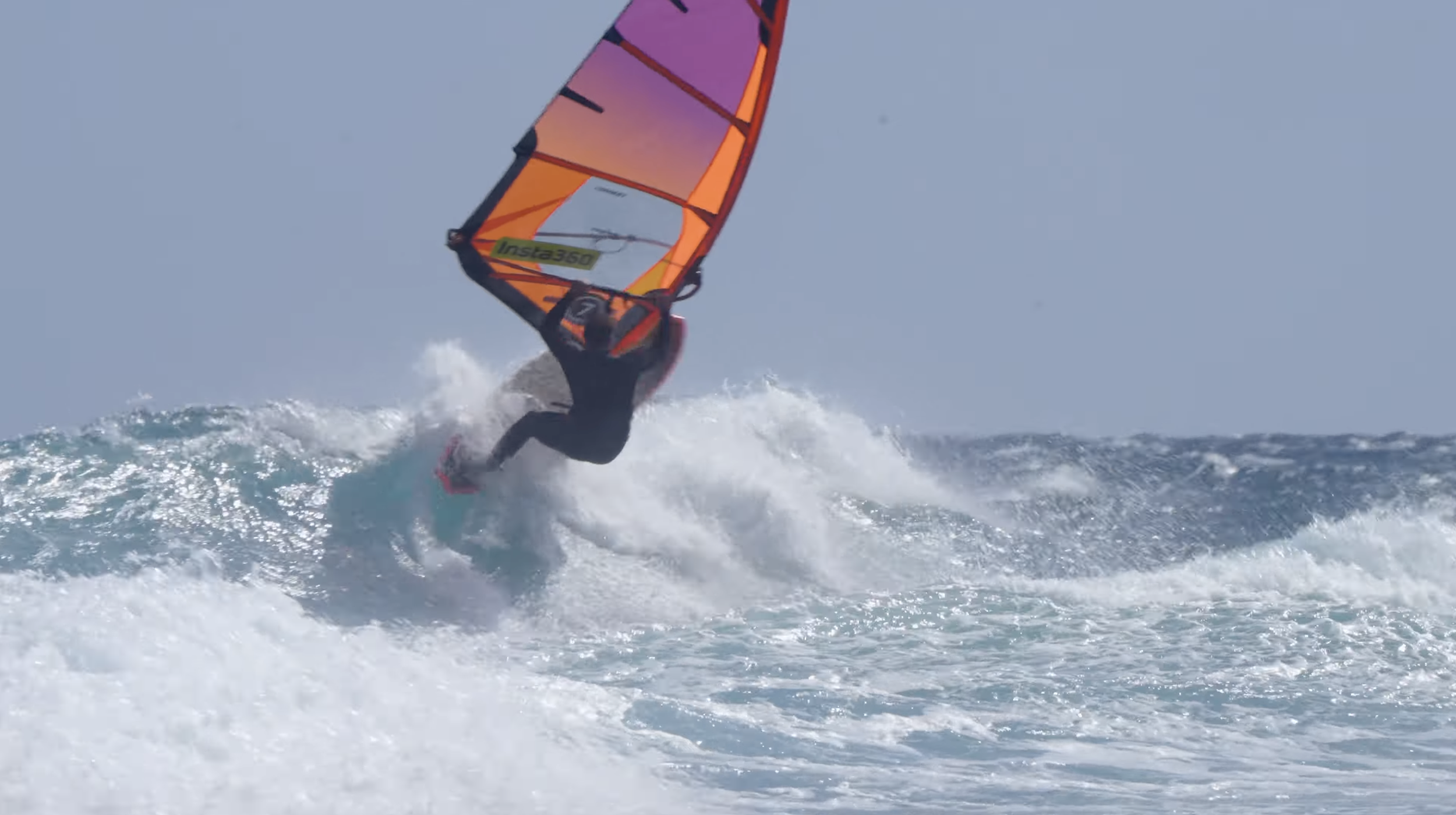
Wave sailing at El Cabezo: powerful, punchy, and for experts only.
This is the famous one. El Cabezo is where the PWA World Cup takes place once a year, and it's for experts only. The entire area is fully covered in rocks. There's a small entrance to the water, a narrow passage that's more or less comfortable if you know your way around. One mistake and you end up on the rocks.
There are a lot of locals out here, and it's mainly a windsurfing spot. If you know what you're doing, you can get insane sessions: the waves have a lot of power, you can get nice ramps going out against them, and on a good day you can link two or three turns, sometimes even more.
Expert only: The spot is gusty. A nearby hotel blocks wind from northerly directions. You'll usually rig one sail size bigger. If you fall and don't waterstart fast, you'll drift straight onto the rocks. There's an informal local rule that keeps this a pure wave windsurfing zone. Respect that.
La JAquita
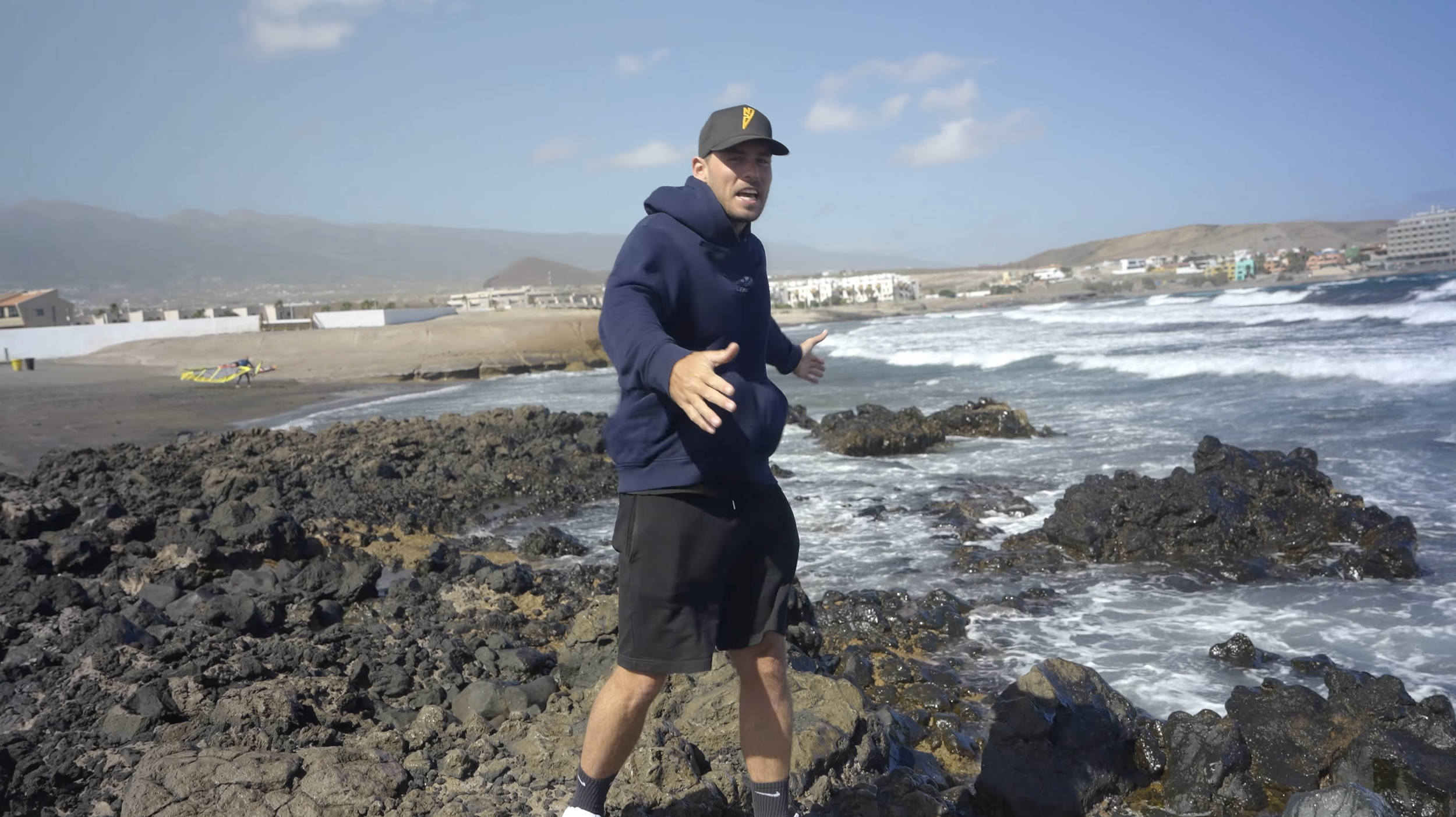
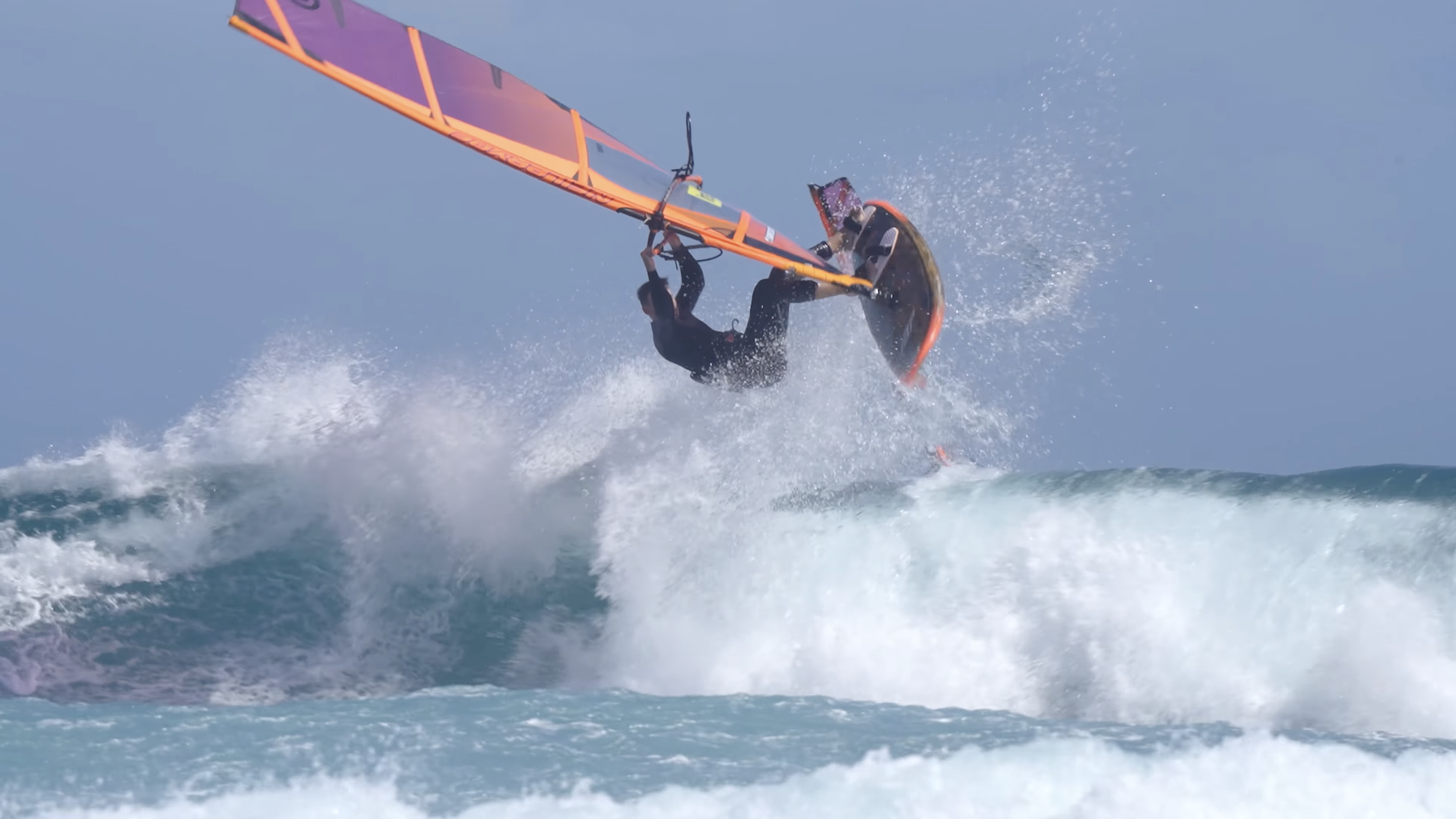
Head further upwind from El Cabazo and you reach La Aquita, the last spot of El Medano. If you stay in one of the apartments above, you've got a decent sandy entrance into the water. A nearby hotel provides wind and wave protection, making the shorebreak more moderate. You often see wing foilers here because of the manageable shorebreak combined with rolling swell outside. For windsurfing, most riders stay a bit more downwind. La Jaquita is more of a wing foil and free-riding spot.
Be aware: outside, the swell is big. This is also a swimmer's beach, so you're only allowed to enter and exit at designated points. And the parking situation here is the worst in all of El Medano, with former parking spaces being converted to a cycling road.
La Caleta
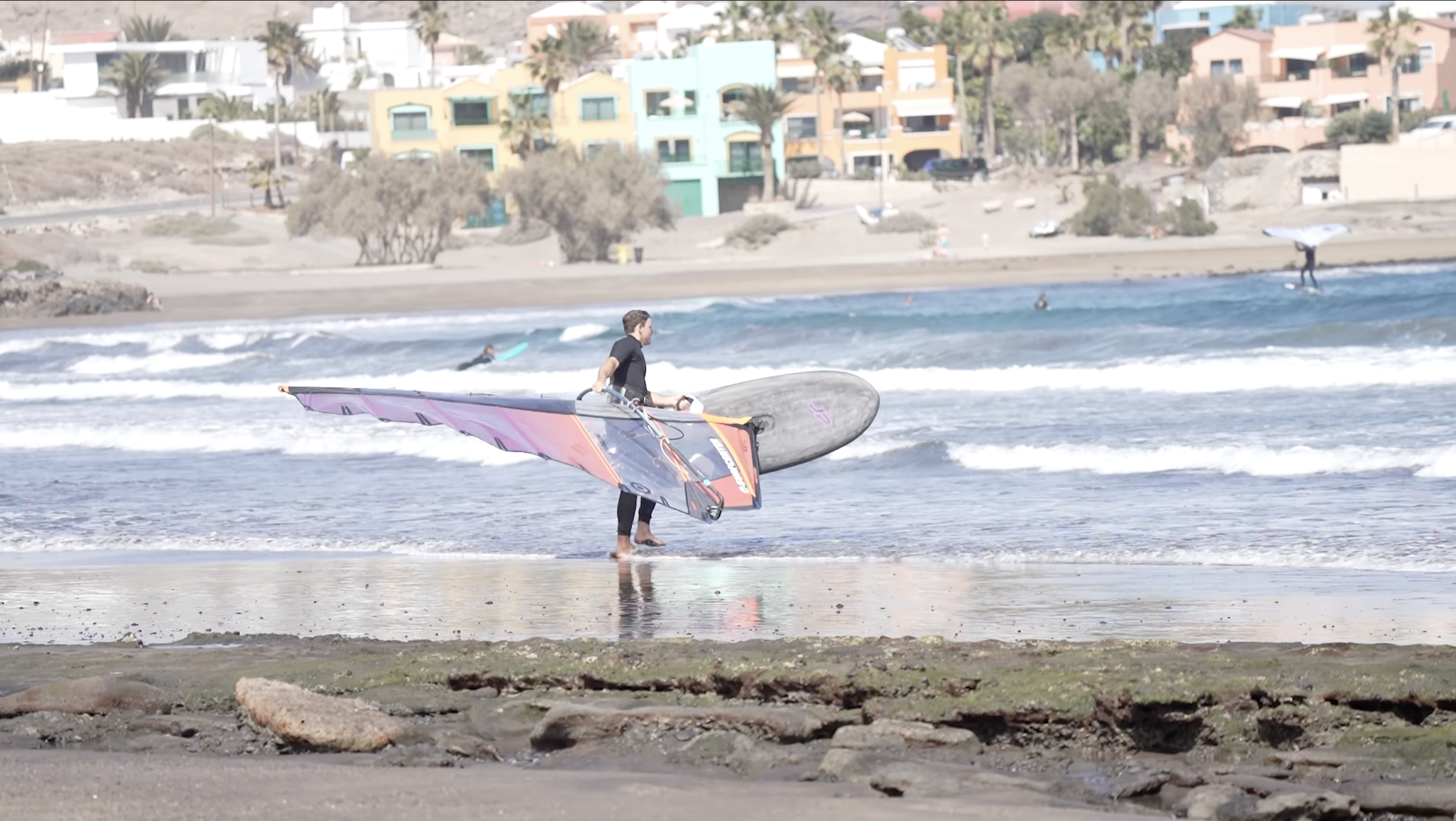
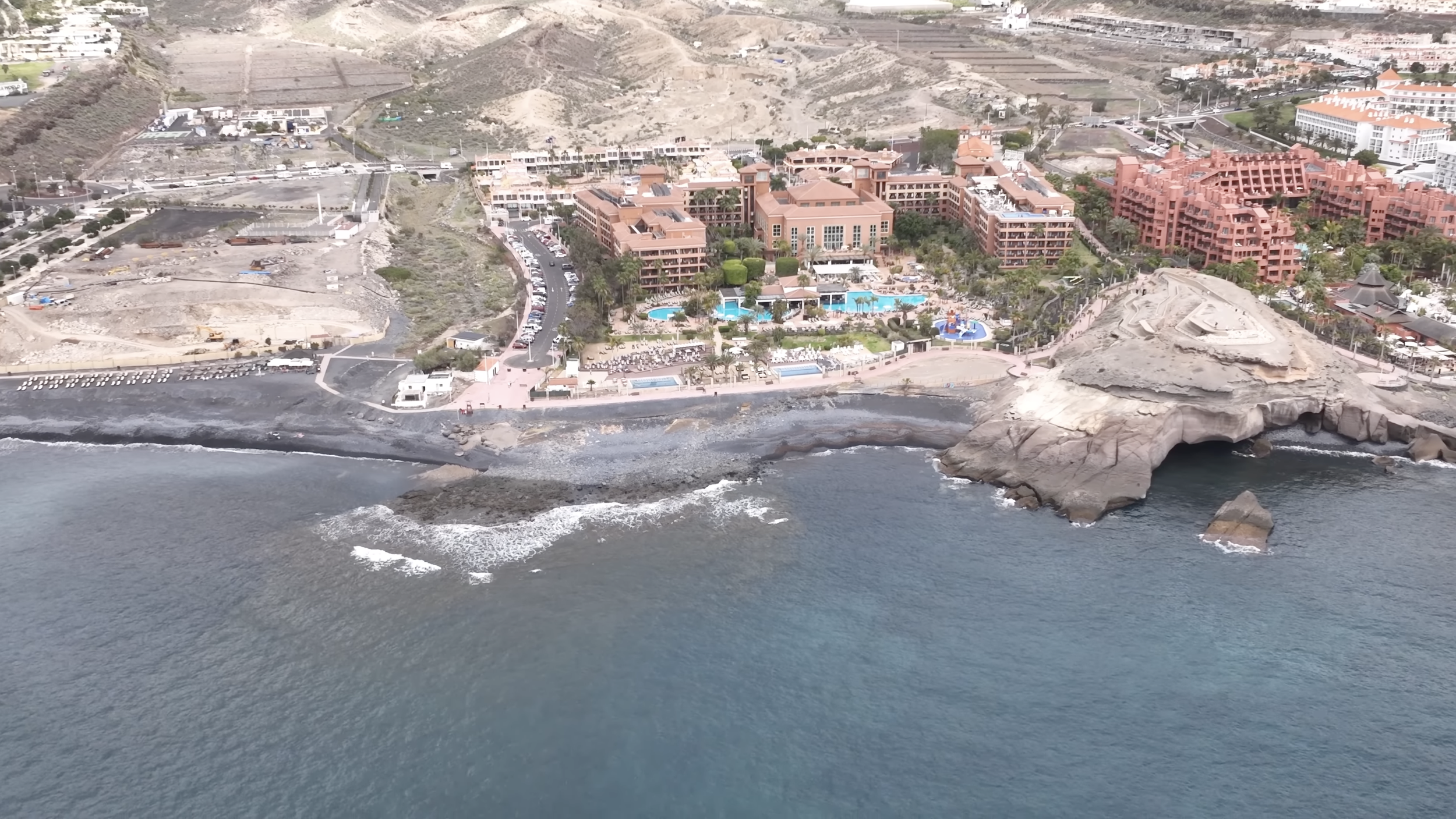
Moving south past Las Americas and Los Cristianos, La Caleta starts working when the northeast trades weaken and westerly winds fill in. Getting on the water here is uncomfortable: a small, busy parking area, a rocky beach with big boulders and only narrow entrances, and a big shorebreak when it's windy. Good timing is essential to avoid damaging your gear. But if the trades aren't blowing in El Medano, La Caleta can deliver if you're comfortable with the challenge.
Las Americas
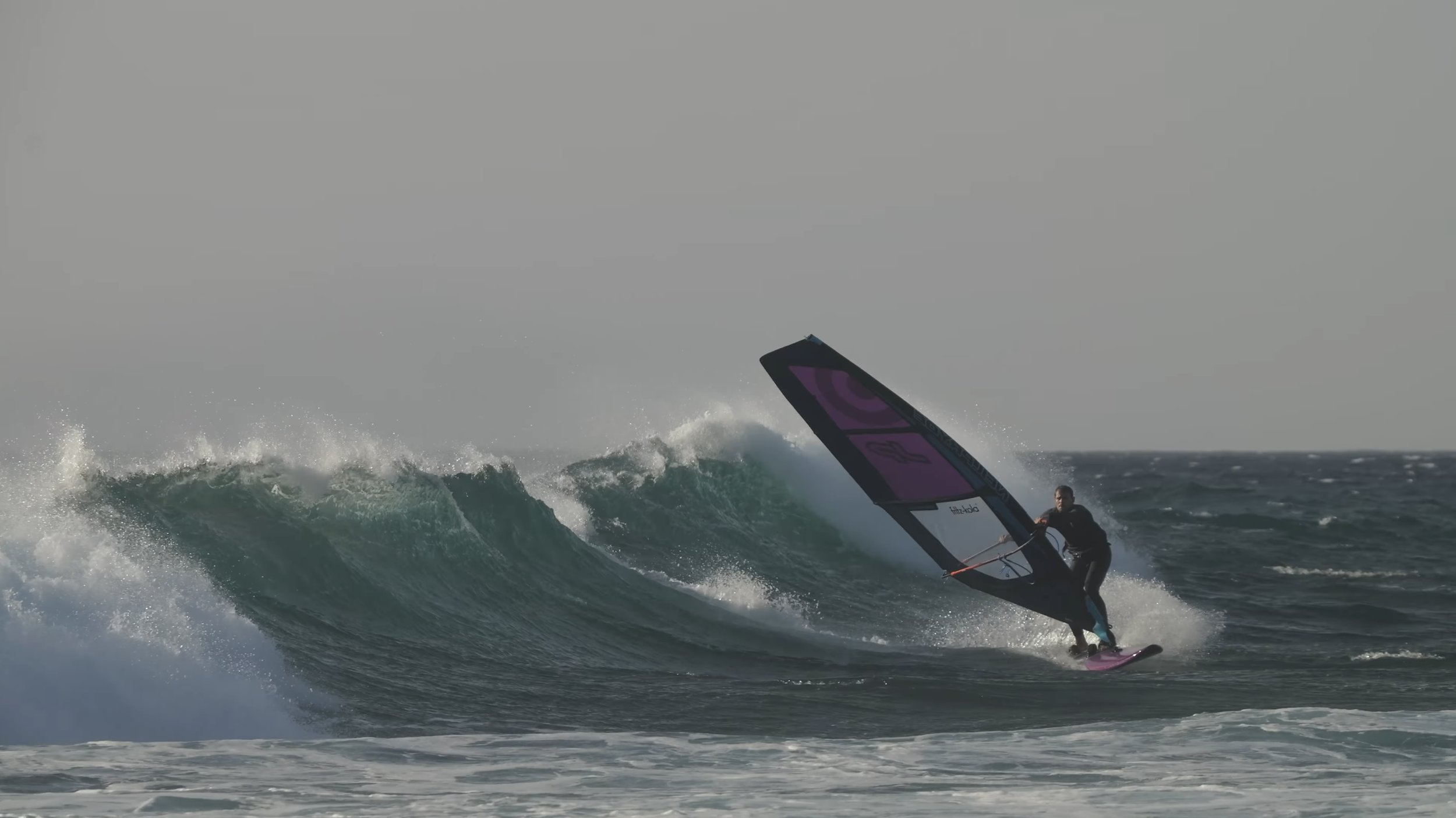
Las Americas is the absolute epicenter of tourism in Tenerife. Not the nicest vibe for water sports, but the conditions at La Fitania can be extremely good, if you're an expert-level rider. The exit is tricky, waves run one to three meters, the current is strong, and when the westerly winds bring a side breeze from the right, the sessions can be world-class. Just make sure your skill level matches what the ocean is throwing at you.
The Harbor
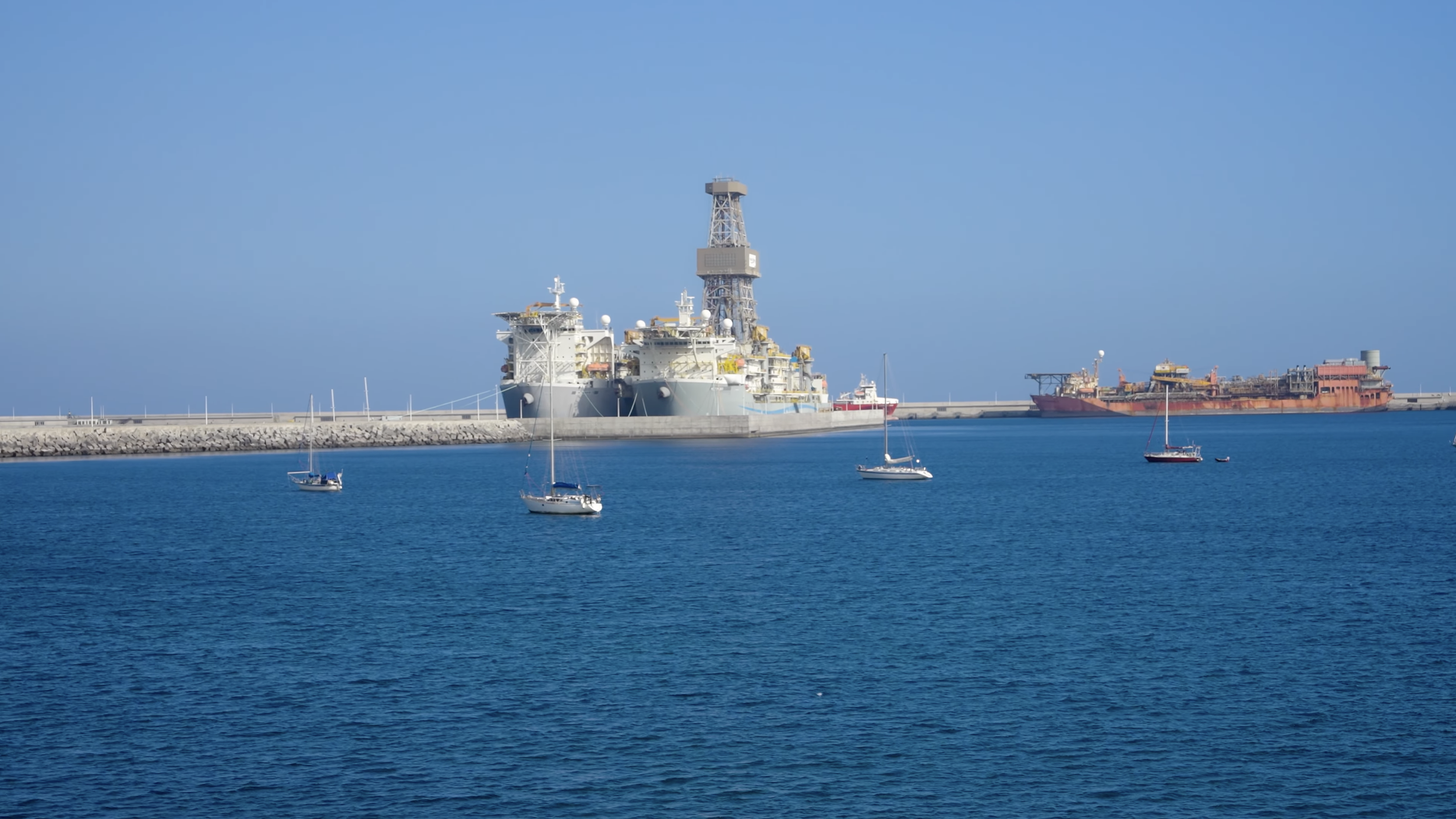
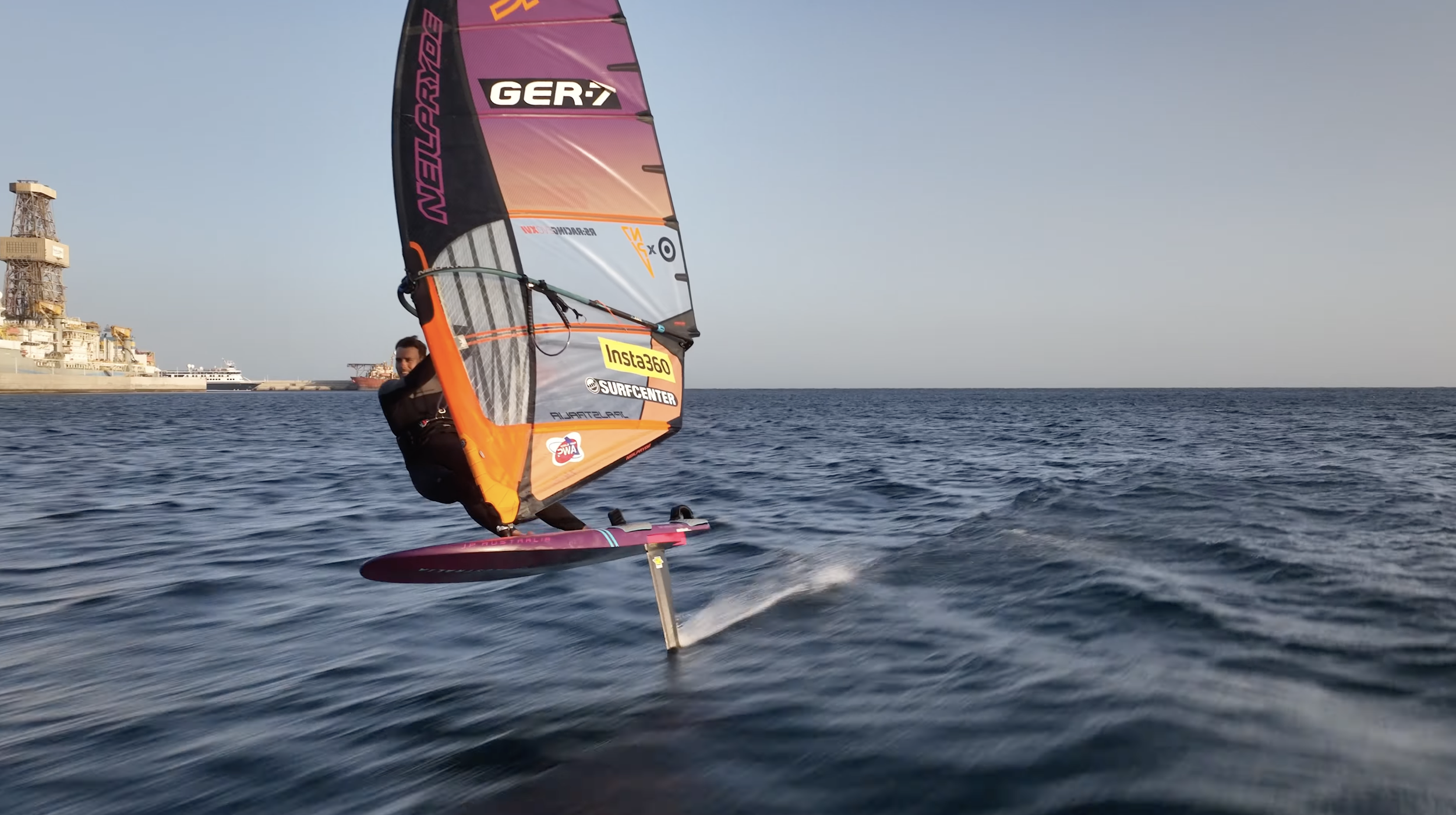
About 15 minutes north of El Medano, the harbor is protected from waves by a large industrial pier, giving you relatively flat water. That same protection makes it gusty, with wind patches everywhere. On a foil you can glide through the holes. On a fin, you need really strong wind for it to work. Access is via dirt road, the beach is massive rounded stones, and it's not an official spot, so there's no rescue service. Self-rescue capability is a must.
The upside? It's easy flat water, great for beginners on wings or boards. And it has loads of parking. On this island, that alone makes it special.
La Tejita & Montaña Roja
On the other side of Montaña Roja, La Tejita offers similar conditions to the harbor: flat water in northeast winds because it's offshore, with the occasional swell rolling in. The wind comes in freely since there aren't many buildings, making it perfect for speed sessions along the beach when it's really blowing. This is a swimmer's beach with lifeguards, so you'll need permission to sail, which is usually no problem at 30+ knots when nobody is in the water.
Bonus Spots
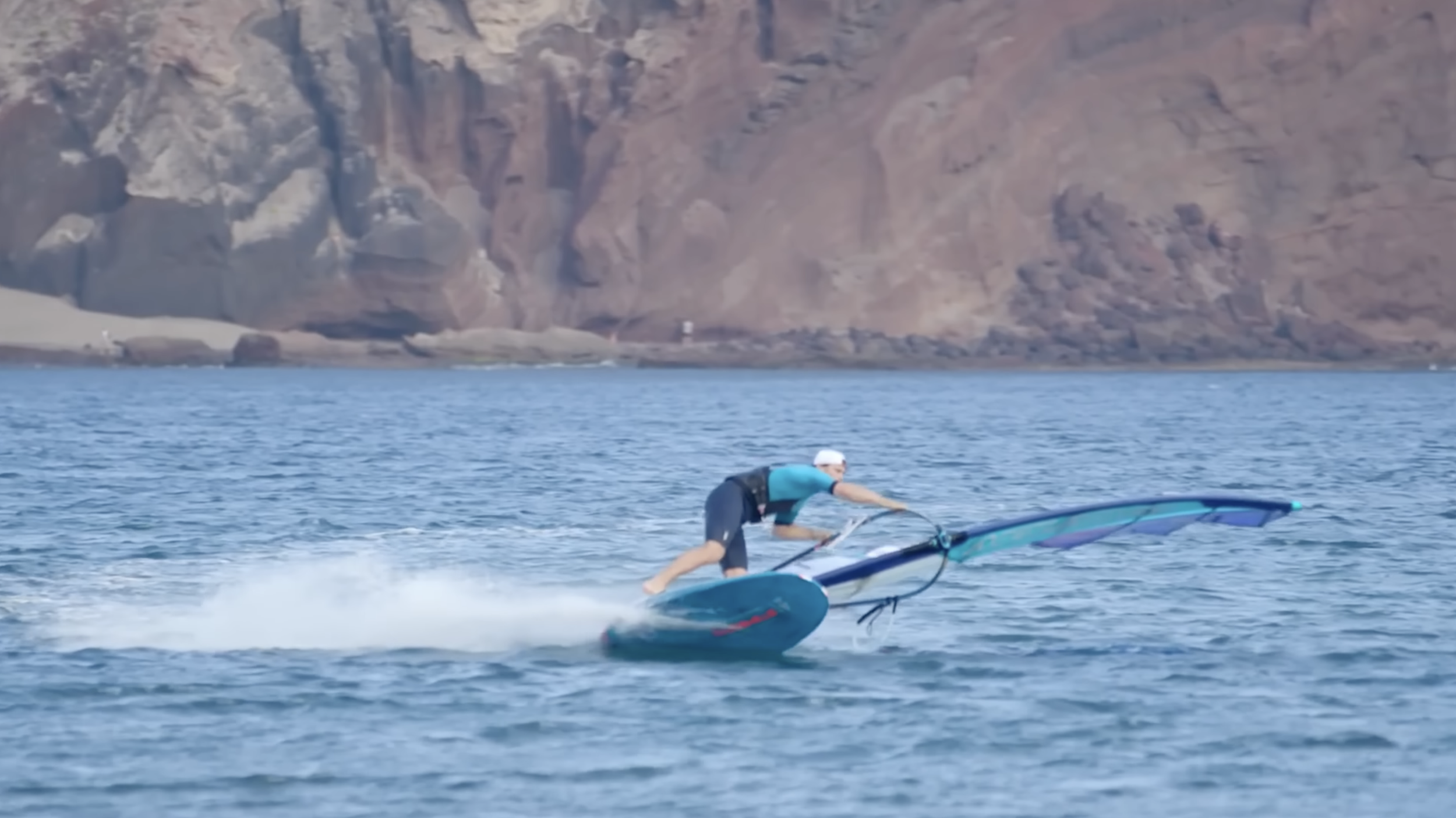
El Poris sits north of the harbor: a small bay with onshore wind and shorebreak. No margin for error, and not much reason to go. Abades is near shore, extremely gusty, and a diving hotspot, so planing at full speed inside the bay is an absolute no-go. On the outside, the current is strong, the waves messy, and the wind punishing. One of the harshest sessions I've ever had on this island was at Abades.
Where to Stay
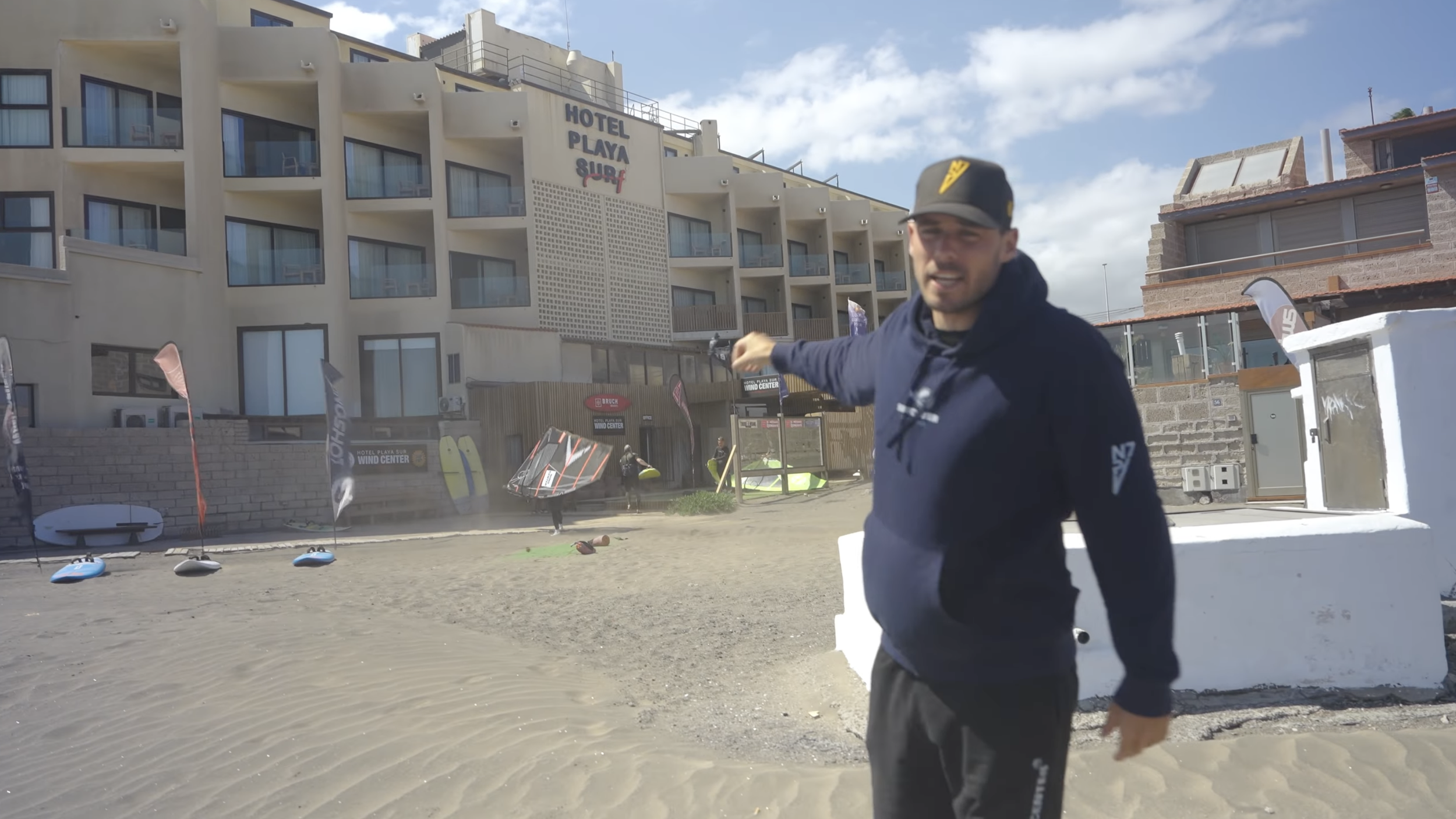
The standout is Hotel Playa Surf, the only hotel right at the beach in the South Bay. It's connected to a windsurf and wing center, offers kitesurfing, has a wind-protected pool for families, and several restaurants on site. We heard from many people that it's excellent, and it's genuinely the place to stay if you want to walk out the door and onto the water.
Beyond the hotel, El Medano is full of apartment rentals. For two to three people, expect about €100 to €150 per day. Digital nomads staying long-term can find places between €900 and €2,000 per month. Share a room and you can get away with even less.
Where to Eat & Drink
Flashpoint is the only bar and restaurant right at the beach in the South Bay. It's super comfortable and a lot of people go there between sessions for a quick lunch. It's always busy though, so bring time and consider reserving a table. Hotel Playa Sur also has restaurants on site. For self-catering, groceries run about €15 to €25 per day. Eating out for all three meals costs roughly €40 to €60 per day.
Windsurf Centers & Rentals
Three main centers line the South Bay beach. The TWS Center has a big variety of rental gear, located down the stairs in a basement-level setup, and offers equipment storage. Hotel Cbbc Playa Surf's Windcenter is directly connected to the hotel with windsurf, wing, and kite gear, plus storage. The Duotone Center is furthest along the beach, carrying wing, kite, and windsurf equipment. For kiting specifically, the Kite Hub is a dedicated center for storage and rentals. Between these four operations, every discipline is covered.
Parking: The Full Reality
Let me be straight: parking in El Medano is a nightmare. At the South Bay, the only parking near the beach is the street along the coast, and it's always full. At El Cabezo, limited spots are usually occupied. At La Aquita, parking is actively being removed for a cycling road. La Caleta has a small, packed lot. Las Americas? Absolute mission.
The one exception is the harbor, which has plenty of space. The takeaway: don't build your trip around driving. Stay in walking distance of the South Bay if you can.
Surf & Non-Wind Days
When there's no wind, there often are still waves. El Medano has surf schools and rentals for beginners. Las Americas offers nice waves for beginners and advanced surfers alike. The north shore delivers sick sessions for expert surfers, but be aware of localism up there. Better to stay in the south unless you know the lineup.
Local Rules & Etiquette
Respect the island. Tenerife faces increasing mass tourism pressure, a housing crisis for locals, and environmental strain. There have been protests across the Canary Islands. As water sport visitors, awareness matters.
Respect the buoy zoning in the South Bay. Don't park irresponsibly. Support local businesses. At El Cabezo, respect the informal windsurfing-only rule. At swimmer's beaches like La Jaquita and La Tejita, use designated entry points and ask lifeguards for permission. At Abades, don't plane through the diving zone. We are guests on this island.
Who Is Tenerife For
Tenerife is perfect for advanced riders who want challenging spots, for those wanting a quick escape from the European mainland (four to five hours and you're in trade winds), for families combining water sports with holiday activities, and for year-round all-discipline water sport addicts who want to windsurf, kite, wing, foil, and surf all in one trip.
Who It's NOT For
Tenerife is not for beginners expecting easy conditions. The wind is gusty, the shorebreak can be brutal, and the swell is real. It's not for flat water seekers: this is a rough-water destination. It's not for those looking for lonely wilderness. And it's absolutely not for people who want to drive to the beach and park next to their gear. That's not going to happen here.
Nico's Personal Tips
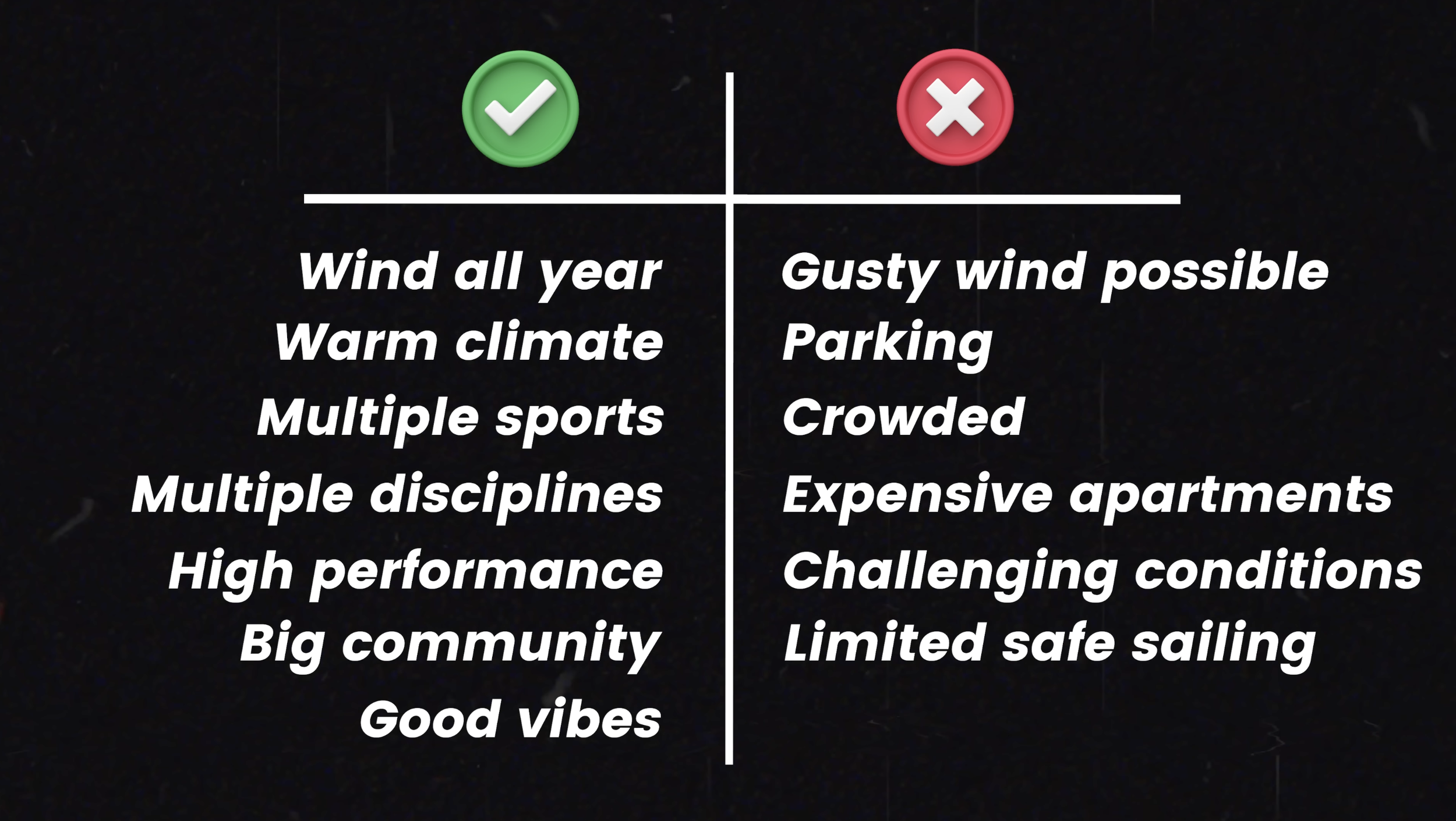
On the plus side: wind year round, warm climate, multiple sports and disciplines, a high-performance environment, and a really big water sports community with great vibes. On the flip side: gusty wind, parking nightmares, crowded conditions, rising housing costs, challenging conditions for the average rider, and limited safe sailing distance in the bay.
My advice: Come prepared for rough conditions, pack one sail size bigger than you think you'll need for the light days, stay in walking distance of the bay, and don't underestimate the shorebreak.
If you want to level up while you're here, check out NP7 Experiences for personal coaching trips in Tenerife, Turkey, Bonaire, and Lake Garda.
See you on the water. 🏄